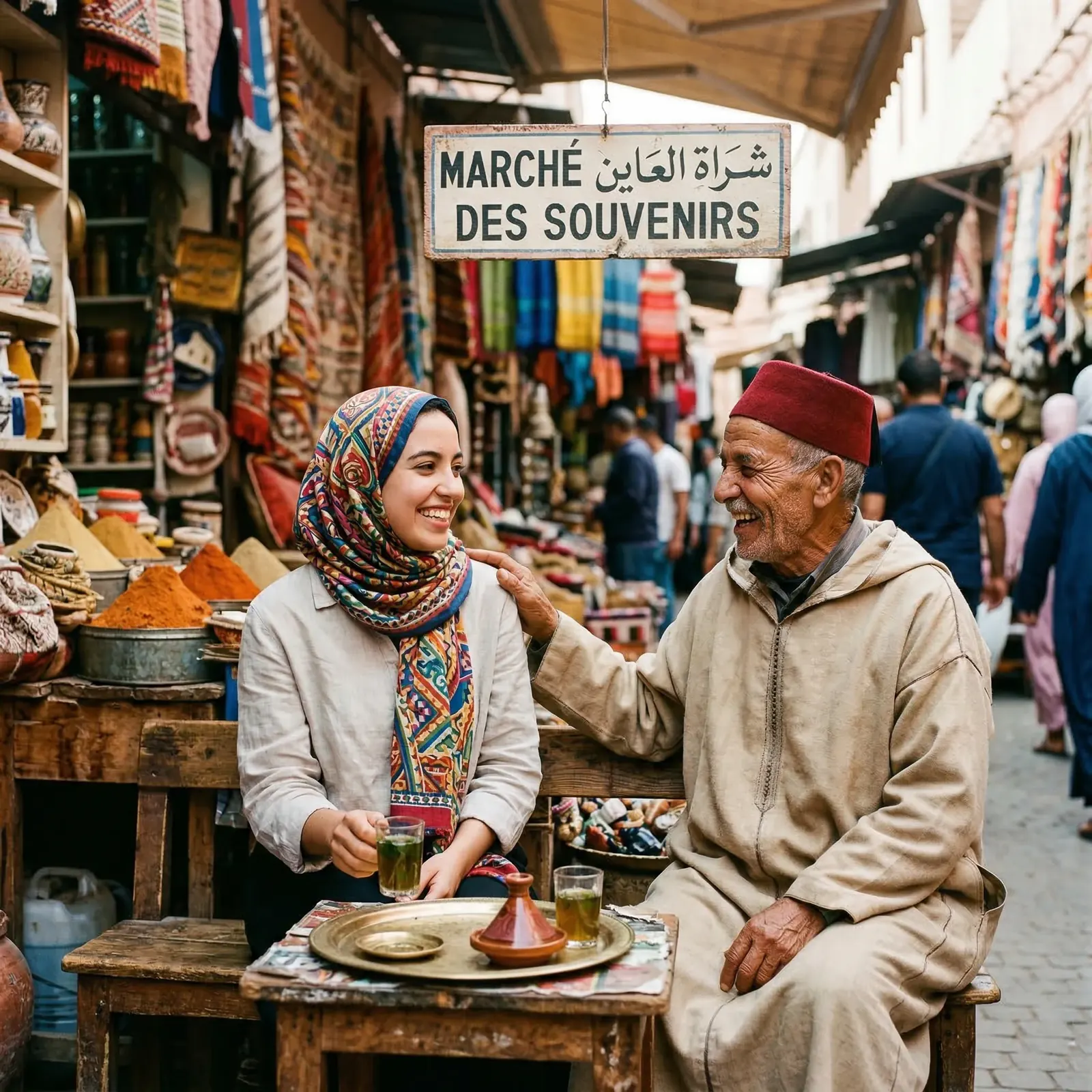
Most visitors to Morocco meet a tagine within their first couple of hours. The clay pot, the conical lid, the rising steam of saffron and preserved lemon — it is the image on every menu and postcard, and it earns its place: it is genuinely delicious. But mistaking the tagine for the whole of Moroccan food is like going to Japan and ordering only ramen. Here, from the blue city, is what the rest looks like.
The tagine, properly understood
The word tagine names both the pot and the dish cooked in it. The conical lid catches the steam and returns it to the base as condensation — a slow braise that coaxes cheaper cuts to falling-apart tenderness. Classic pairings include lamb with prunes and almonds (mrouzia), chicken with preserved lemon and olives, and kefta (spiced minced beef) with eggs. Each carries its own spice profile; the lemon chicken is the mildest and the one international guests warm to first. In the Rif you will also meet tagines leaning on the mountains' own produce — goat, wild herbs, local olives.
The finest tagines rarely sit in restaurants. Ask us to point you to a small neighbourhood kitchen in Chefchaouen where the pots have ticked over low heat since morning, or let us arrange a cooking experience in a private Rif home.
Pastilla — the Fassi triumph
If the tagine is Morocco's everyday dish, pastilla is its showpiece. A paper-thin warqa pastry wraps slowly braised pigeon (or chicken), egg, saffron and fresh coriander, and the whole parcel is finished with a dusting of icing sugar and cinnamon — sweet and savoury at once, inside a flaky shell. It was born in Fès, just a few hours' road from Chefchaouen, and the best versions still belong to that city, though good guesthouse kitchens across the north prepare it for special dinners. A seafood pastilla has taken hold on the coast at Essaouira and is worth seeking out.
Couscous — the Friday ritual
Couscous is the dish families gather around on Friday after the midday prayer, and in Chefchaouen you can feel the whole medina slow down for it. In its home culture it is not a restaurant dish at all — it is domestic, maternal, communal. The semolina is steamed three times over a vegetable broth, mounded into a dome, then dressed with slow-cooked turnip, courgette, carrot and cabbage and a choice of lamb, chicken or simply vegetables. Restaurants tend to offer it Fridays and Saturdays; if you are in town those days, order it.
Street food worth stopping for
Chefchaouen's street food is gentler than the big-city spectacle, and all the more pleasant for it. As the evening cools, the lanes off Place Outa el-Hammam fill with charcoal smoke and easy chatter. Look for snail broth (babbouche) ladled into a cup — cumin-spiked, and you fish the snails out with a pin — alongside grilled merguez in a crusty roll, msemen brushed with mountain honey, and fresh orange juice for a few dirhams a glass. The Rif's pride is its goat cheese, sold soft and fresh from village stalls.
A short drive away the variations multiply: in Fès, the lane of the spice merchants where bissara — thick dried fava bean soup with cumin and a slick of olive oil — is eaten standing up for breakfast, bread dipped straight into the bowl. On the coast at Essaouira, sardines split and grilled over charcoal at the port are the defining bite.
Vegetarian and vegan eating in Morocco
Moroccan cooking is kind to non-meat eaters, though veganism as a concept is not widely understood and will need a clear explanation. The salad starters — zaalouk (smoked aubergine and tomato), taktouka (roasted pepper and tomato), carrot with cumin, beetroot with chermoula — are all plant-based and tend to arrive without asking at a traditional table. A plain vegetable tagine with olives and preserved lemon is available everywhere in Chefchaouen. Vegans should ask specifically about smen (aged butter), which slips into couscous and some breads, and note that the starters can contain egg.
Cooking classes and private kitchens
A half-day cooking class is one of the best single experiences the north offers. The shape we prefer opens with a guided walk through the blue medina to gather ingredients — watching a spice merchant blend ras el hanout by hand is worth the morning on its own — then a session in a private home or guesthouse kitchen learning three dishes. You eat what you make, over mint tea and the warm satisfaction of having done it yourself. We include this in our cultural tours and can set it up as a standalone for guests travelling on their own.
What to drink
Morocco is a Muslim country; alcohol turns up in licensed restaurants and hotels but is not widespread, and in the conservative north it is scarce. The default is atay — mint tea poured from a height for froth, three glasses in a row (the first is life, the second love, the third death, in the local saying), and here the Rif often slips a sprig of bitter chiba wormwood into the pot. Fresh orange juice, almond milk and avocado smoothies are the popular alternatives. Tap water is treated but variable; we advise bottled water throughout.
Frequently asked
Is Moroccan food spicy?
Moroccan cooking is fragrant rather than fiery. Ras el hanout, cumin, cinnamon, saffron and preserved lemon carry the flavour. Harissa (a chilli paste) turns up as a side condiment in some regions but is rarely cooked into the main dish the way Thai or Indian food might be. In the north, around Chefchaouen, the kitchen leans gentle and herbal, so guests with a low tolerance for heat almost never struggle.
What is the difference between a tagine and a couscous?
Both are slow and aromatic, but tagine is a braise — meat and vegetables cooked low in the conical clay pot until they fall apart. Couscous is steamed semolina heaped under a separately simmered stew of vegetables or meat. Couscous is traditionally the Friday family meal, while tagine appears any day. In Chefchaouen and most Moroccan towns, restaurants tend to serve couscous only on Friday and Saturday.
What should vegetarians and vegans order in Morocco?
Moroccan food treats vegetarians well. Zaalouk (smoky aubergine and tomato), taktouka (roasted pepper salad), bissara (dried fava bean soup with cumin and olive oil) and a plain vegetable tagine are all excellent and easy to find — bissara in particular is a beloved Rif breakfast. Vegans should remember that smen (aged butter) often finds its way into the pot, so it is worth asking directly.
What are the best street foods to try in northern Morocco?
In the blue city the food is calmer than a big-square spectacle, but the lanes around Place Outa el-Hammam reward an evening wander: grilled merguez in bread, bowls of snail broth (babbouche), goat cheese from the surrounding Rif villages, fresh orange juice pressed to order, and msemen (flaky griddle bread with honey). Things wake up after sunset, once the day's heat has lifted.
Can you do a cooking class in Morocco?
Yes, and we rate it as one of the best half-days of any northern trip. A good class starts with a morning walk through the medina to gather ingredients, then moves into a private home or guesthouse kitchen to cook two or three dishes. You eat what you make. We build this option into several of our cultural itineraries around Chefchaouen.
Is tap water safe to drink in Morocco?
Tap water is treated but its quality varies by town and neighbourhood. We advise guests to drink and brush teeth with bottled water. Kitchens cook with tap water without issue. Skip ice at informal stalls; ice in established restaurants is fine.
Eat well in Morocco
We'll thread the best food through your itinerary.
From an evening street-food wander through the blue medina to a private Rif cookery class, Chefchaouen Blue City Tours weaves the best of Moroccan food into every programme — dietary needs arranged in advance.
Enquire about a culinary itinerary