Things to do in Chefchaouen

Things to do · Chefchaouen

Things to do in Chefchaouen

In the heart of the medina, set right on the main square of Plaza Uta el-Hammam, stands the Kasbah of Chefchaouen — a red-walled fortress whose warm ochre stone makes a striking contrast with the famous blue lanes outside. It dates to the 15th century, the era of the town's founder Moulay Ali ben Rachid, and was extended in later periods. Inside its walls you find tranquil Andalusian-style gardens, a small ethnographic museum, old prison cells, and a tower you can climb for rooftop views over the blue town and the Rif mountains. Here is what to know before you step inside.

10 experiences

The best of Chefchaouen

01Background

A 15th-century fortress at the town's heart

The kasbah is the historic fortified core of Chefchaouen, built in the 15th century in the era of the town's founder, Moulay Ali ben Rachid, and extended in later periods. Its solid red-ochre walls anchor the medina and mark the spot where the town began, giving the kasbah a central place in Chefchaouen's story.

02Atmosphere

Red walls against the blue town

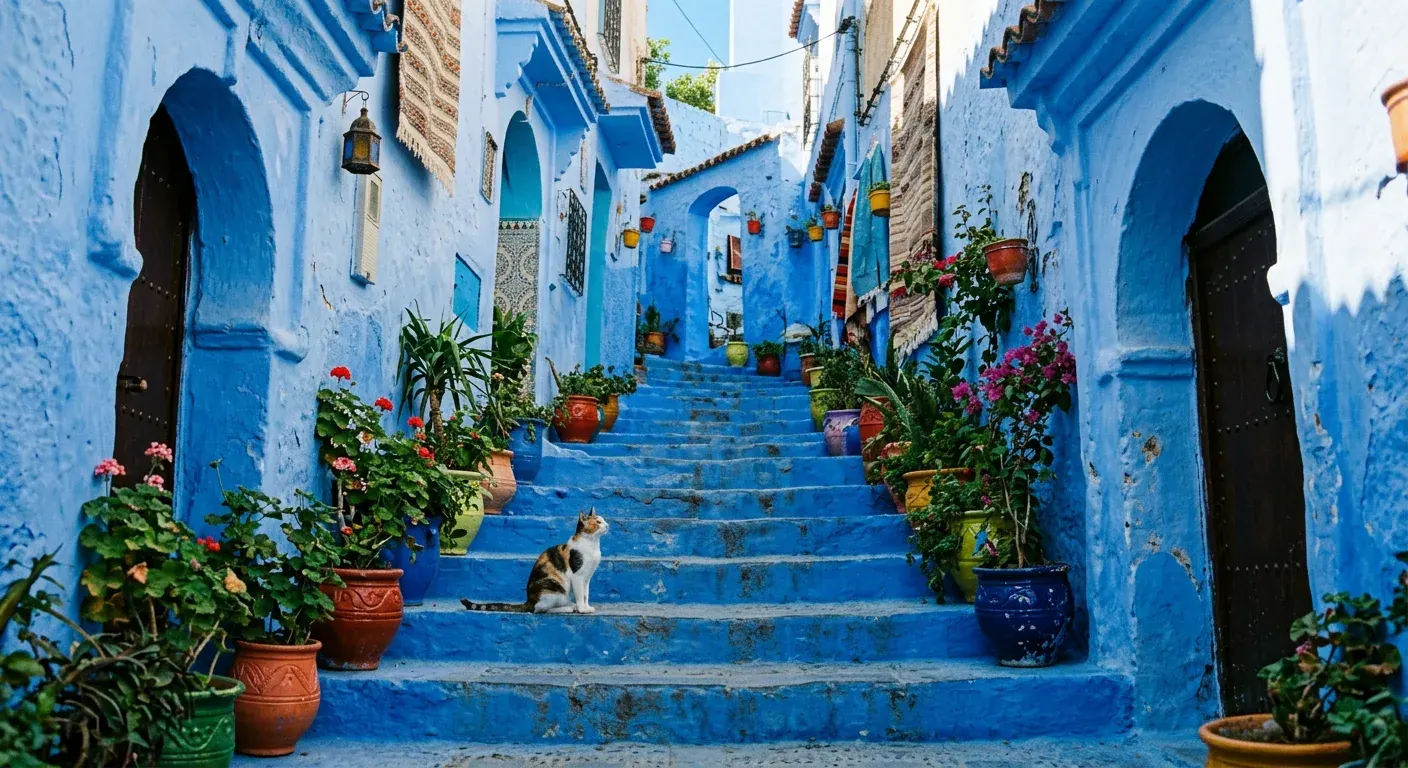
One of the kasbah's pleasures is the contrast it strikes: warm red and ochre stone walls set against the cool blue-washed lanes that Chefchaouen is famous for. Stepping from the bright blue streets into the earthy fortress and its shaded gardens is a change of mood as much as scenery.

03Gardens

The Andalusian-style gardens

Within the walls lie calm, Andalusian-style gardens — orderly planting, shade and a sense of quiet that feels far from the busy square outside. They are an easy place to slow down for a few minutes, and they reflect the Andalusian heritage that shaped much of Chefchaouen's old town.

04Museum

The ethnographic museum

Inside the kasbah is a small ethnographic museum displaying Moroccan crafts, old photographs, traditional weapons, and musical instruments. It gives useful context on the region's culture and daily life, and it is a compact visit rather than a sprawling one — a good complement to wandering the medina.

05View

The tower and rooftop views

A tower within the kasbah can be climbed for elevated views out over the blue medina rooftops and across to the surrounding Rif mountains. It is one of the better vantage points from inside the town itself, taking in the patchwork of blue houses below and the green hills beyond.

06History

The old prison cells

The kasbah also preserves old prison cells, a reminder that the fortress was a working seat of power and defence, not just a decorative landmark. They add a more sober historical layer to a visit that is otherwise dominated by gardens and views.

07Setting

Its setting on Plaza Uta el-Hammam

The kasbah opens directly onto Plaza Uta el-Hammam, the main square of the medina and its social centre. The square is lined with cafes and restaurants, so the fortress sits in the middle of the town's daily life, easy to reach and easy to fold into a slow afternoon in the old town.

08Practical

How long to allow

Most visitors find an hour or so is enough to take in the gardens, the museum, the tower and the cells at an unhurried pace. It is a modestly sized site rather than a half-day attraction, which makes it easy to combine with a coffee on the square and a walk through the surrounding lanes.

09Photography

Photography inside the walls

The gardens, the warm stone walls and the view from the tower all photograph well, and the red tones make a pleasing counterpoint to the blue streets in your wider Chefchaouen set. As at any museum, check for any posted restrictions on photography inside the exhibition rooms before you start shooting.

10Practical

Admission and visiting

There is usually a small admission charge to enter the kasbah and its museum — treat the exact figure and the opening hours as things to confirm on the day, as they can change. Buy your ticket at the entrance on the square and ask there if you want to be sure of current times.

Frequently asked

What is there to see inside the Kasbah of Chefchaouen?

Inside the red-walled 15th-century fortress you find tranquil Andalusian-style gardens, a small ethnographic museum with crafts, old photos, weapons and instruments, old prison cells, and a tower you can climb for rooftop views over the blue medina and the Rif mountains.

How long do you need to visit the kasbah and museum?

About an hour at an unhurried pace is usually enough to see the gardens, the ethnographic museum, the tower and the prison cells. It is a modestly sized site, so it pairs easily with a coffee on Plaza Uta el-Hammam and a walk through the medina.

How old is the Kasbah of Chefchaouen?

The kasbah dates to the 15th century, the era of the town's founder Moulay Ali ben Rachid, and was extended in later periods. It is the historic fortified core of the medina and marks the spot where Chefchaouen began.

Is there an entrance fee for the kasbah?

There is usually a small admission charge to enter the kasbah and its ethnographic museum. The exact amount and the opening hours can change, so buy your ticket at the entrance on Plaza Uta el-Hammam and check current times there.

See it with a local

Turn this into a private Chefchaouen trip.

We'll build a private, guided plan around the experiences you care about — with a driver, hand-picked riads and a written quote in 24 hours.

Contact us for pricing

More cities