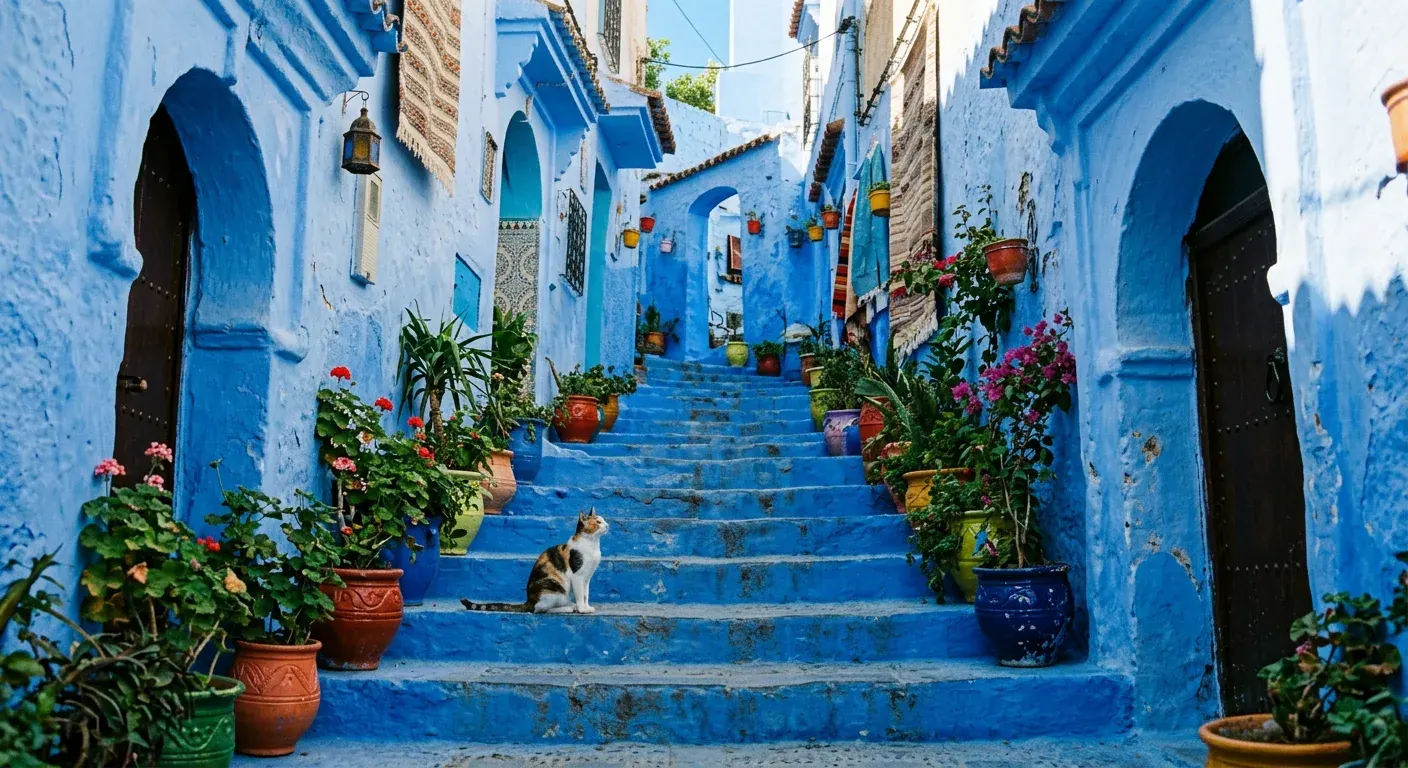
Behind every blue door in Chefchaouen sits a small workshop or shop. The Blue City is one of Morocco's most relaxed places to buy crafts — woven wool blankets, hand-painted pottery, leather and Rif mountain food — with far less hassle than the big-city souks. Here is what to look for and how to buy it well.
Chefchaouen's signature buy is its thick wool weaving. Workshops around the medina still weave blankets, throws and scarves on wooden looms, often in natural creams, reds and the town's blues. Watch the weaving before you choose, and check the weight and finish of the wool.
02Crafts
Wool Djellabas & Mountain Garments
The Rif is cold in winter, and the town is known for warm hooded wool djellabas and shawls. Many shops in the upper medina sell handmade pieces in undyed wool — a practical, genuinely local souvenir rather than a mass-market import.
03Crafts
Hand-Painted Pottery & Ceramics
Bowls, tagines and decorative plates are painted by hand and stacked outside shops throughout the lanes. Look closely at the glaze and the painting to tell a finished artisan piece from a quicker tourist one, and ask whether a tagine is for cooking or for display.
04Crafts
Leather Goods
Bags, slippers (babouches) and small leather pieces are widely sold across the medina. Prices are generally gentler than in Fez or Marrakech, and the smaller shops make it easy to handle the leather and compare quality before you commit.
05Food
Rif Goat Cheese & Local Honey
The Rif mountains around Chefchaouen are known for fresh goat cheese, often sold alongside mountain honey and olives at small food stalls and grocers. It is best eaten the same day with bread — a true taste of the region rather than a packaged keepsake.
06Food
Spices, Herbs & Mountain Teas
Stalls near the squares sell spices, dried herbs and the loose green tea and fresh mint used for Morocco's famous sweet tea. Buy small amounts you will actually use, and smell before you buy to judge freshness.
07Shopping
Plaza Uta el-Hammam Stalls & Souks
The main square, Plaza Uta el-Hammam, and the lanes leading off it are the busiest place to browse, with craft stalls, food sellers and small shops clustered together. It is the easiest spot to compare prices across several sellers before deciding.
08Photography
Blue-Wash Shopfront Photography
The shops themselves are part of the experience: blue-washed walls hung with carpets, baskets and pottery make some of Chefchaouen's most photographed scenes. Ask before photographing a shopkeeper or their goods up close — a small purchase or a polite request goes a long way.
09Crafts
Natural Dyes & Argan Products
Several shops sell natural pigments, soaps and argan oil products. Argan oil is not grown in the Rif, so for genuine cooking or cosmetic oil check the label and price; the powdered blue pigment, by contrast, is very much a local Chefchaouen specialty.
10Tips
How to Bargain in Chefchaouen
Bargaining is expected but friendlier here than in larger cities. Greet the seller, ask the price, then counter politely and be ready to settle somewhere in between. Stay relaxed, smile, and walk away if it does not feel right — there is rarely real pressure to buy.
Frequently asked
What is Chefchaouen famous for buying?
Chefchaouen is best known for its woven wool — blankets, throws, scarves and hooded djellabas — along with hand-painted pottery, leather goods and Rif mountain food such as fresh goat cheese and honey. Its craft shops are calmer and often cheaper than those in Fez or Marrakech.
Is shopping in Chefchaouen cheaper than Marrakech or Fez?
Often, yes. Prices for many crafts tend to be a little lower and the selling style is more relaxed, with less aggressive pressure than the big-city souks. Quality varies shop to shop, so compare a few sellers and inspect the workmanship before you buy.
Do you need to bargain in Chefchaouen?
For souvenirs and crafts, bargaining is normal and expected, though it is friendlier and lower-pressure than in larger Moroccan cities. Food sold at grocers and stalls usually has a set price. Greet the seller, counter politely and aim to meet in the middle.
Can I take photos of the shops and their goods?
The blue-washed shopfronts hung with carpets and pottery are among Chefchaouen's most photogenic scenes, and photographing them is fine. As a courtesy, ask before taking close-up photos of a shopkeeper or their stall; making a small purchase first is always appreciated.
See it with a local
Turn this into a private Chefchaouen trip.
We'll build a private, guided plan around the experiences you care about — with a driver, hand-picked riads and a written quote in 24 hours.