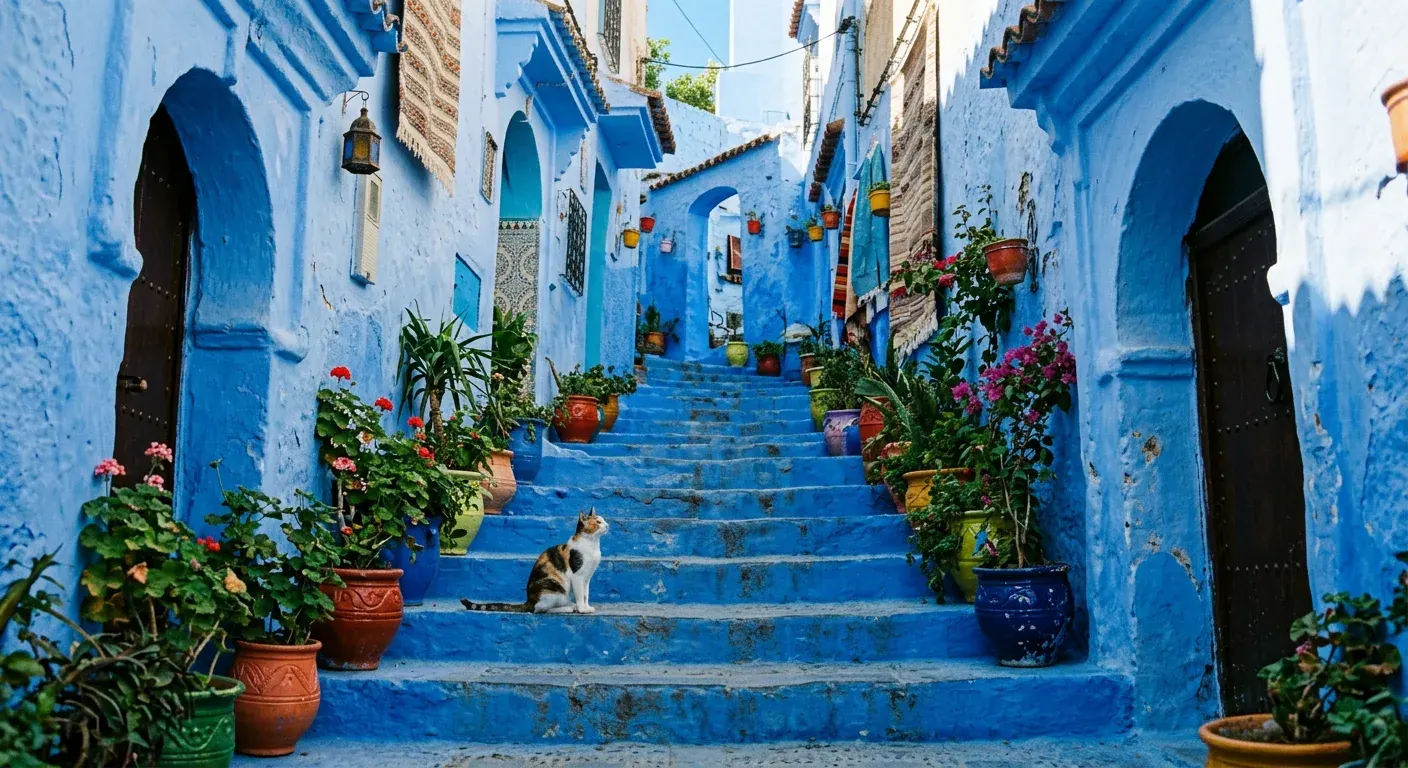
Chefchaouen is a mountain town, and that single fact shapes everything about when to come. Perched at around 600 metres in the Rif of northern Morocco, it runs cooler and wetter than the lowland cities most visitors picture when they think of Morocco. While Marrakech bakes, Chefchaouen stays breathable; while the desert is mild in winter, the blue lanes here can turn cold, wet and moody. There is no single "wrong" month — each has its own character — but there is a clear sweet spot. This is our honest, month-by-month read on when to visit the blue city, based on typical seasonal norms rather than any one year's weather.
The short answer: spring and autumn
If you only remember one thing: April–June and September–October are the best windows to visit Chefchaouen. In these months the temperatures are typically mild (broadly the high-teens to mid-twenties Celsius by day), the surrounding hills are either lush green or turning golden, the light is clean and even for photography, and the medina is calmer than the peak of midsummer. Spring brings wildflowers and the greenest hillsides; autumn brings warm, settled, golden days. Both deliver Chefchaouen close to its best.
The rest of the year still has its rewards — winter for moody, empty blue lanes, high summer for warm evenings and a lively town — but the shoulder seasons are where the weather, the scenery, the crowds and the light line up most comfortably.
Chefchaouen season by season
Winter — December, January, February
Winter is the cold, wet face of the blue city. Expect daytime temperatures broadly in the range of about 5–15°C, with rain a regular feature, occasional frost on the coldest mornings, and the rare possibility of light snow dusting the surrounding Rif peaks rather than the lanes themselves. The town is at its quietest now — the day-trip coaches thin out and the medina feels genuinely local, its blue walls deepened and saturated by the wet weather and grey skies. For travellers who want atmosphere and solitude over guaranteed sunshine, winter is underrated, provided you pack proper layers, waterproofs and shoes with grip for slick cobbles.
- December — cool, often wet, festive and quiet; short daylight hours, so start early.
- January — typically the coldest stretch; clear cold days alternate with rain, and frost is possible at dawn.
- February — still cold and changeable, but the first hints of the coming spring green appear on the hills.
Spring — March, April, May, June
Spring is, for us, the highlight of the Chefchaouen year. The Rif hillsides turn vivid green, wildflowers come out, and the air warms into a comfortable mild range — broadly the high-teens to mid-twenties Celsius through the heart of the season. The light is soft and clear, which is exactly what the blue walls want. March can still carry the tail of winter's rain and chill, but by April the town hits its stride, and May and June are reliably lovely. This is the best time for walking the steep lanes in comfort and for day trips into the surrounding mountains.
- March — shoulder of winter and spring; greening hills, lingering showers, fewer crowds, often excellent value.
- April — green, mild and fresh; one of the very best months for scenery and photography.
- May — warm, settled and bright; long, pleasant days for exploring and hiking.
- June — warming toward summer but still comfortable, with long daylight and clear evening light.
Summer — July, August
Summer in Chefchaouen is warm and dry, but the altitude works in your favour: while lowland Morocco swelters, the mountain air keeps the blue city more comfortable. Expect a broad range from the high-teens overnight to around the low thirties Celsius at midday, with cool, pleasant evenings. The trade-offs are crowds — this is peak season, with both international visitors and Moroccans heading inland for cooler air — and strong midday sun on the open, steep lanes. The fix is simple: walk and photograph in the early morning and late afternoon, and rest or eat in the shade through the hottest hours.
- July — warm, dry and busy; brilliant blue-sky days but strong midday sun, so plan around the edges of the day.
- August — the busiest and warmest stretch; lively and atmospheric, but book accommodation well ahead.
Autumn — September, October, November
Autumn is the other star season. September and October are mild, calm and golden, with summer's crowds easing but the warmth holding on — typically a comfortable mild range, clear light, and settled weather that is ideal for photography and long walks. As November arrives the air cools, the first rains return, and the town begins its slide toward the quieter winter rhythm. For travellers who want warm-but-not-hot days, golden hillsides and fewer people than midsummer, this is the window to target.
- September — mild, golden and calmer than August; one of the best all-round months to visit.
- October — settled, comfortable and atmospheric, with lovely autumn light on the blue walls.
- November — cooling and increasingly wet; quiet and moody as winter approaches.
The light: photographing the blue walls
Chefchaouen is one of the most photographed towns in Morocco, and the blue walls are particular about light. They look their best under soft, indirect illumination — the warm, raking light of early morning and the hour before sunset, or the even, shadowless tones of an overcast spring or autumn day. Hard midday summer sun is the enemy of the iconic blue-lane shot: it blows out the highlights, deepens the shadows into hard black, and flattens the subtle cobalt-to-periwinkle variation that gives the medina its depth.
For the cleanest results, plan serious photography for the shoulder seasons and the edges of the day. Dawn at the Spanish mosque terrace above the medina, with the town still quiet and the light just catching the rooftops, is the classic shot — and it is far easier to come by in spring and autumn, when the blue lanes are calmer, than at the height of the summer crowds.
Crowds, Ramadan and a note on footing
Crowds track the weather: July and August are busiest, the shoulder seasons are calmer, and winter is quietest of all. If you can travel midweek and stay overnight rather than visiting only at the midday peak, you will see a noticeably gentler version of the town in any month.
One thing that does not follow the seasons is Ramadan, which moves earlier each year on the Western calendar. During the holy month some cafés and shops shift their hours, kitchens may open later, and the town is quieter by day and livelier after sunset. It can be a rewarding, atmospheric time to visit if you travel respectfully — just check the dates for your travel year and plan meals and shopping around the local rhythm.
Finally, whatever month you choose, remember Chefchaouen is built on steep, cobbled mountain lanes. Bring shoes with good grip — slick in winter rain, hot underfoot in summer — and pack in layers, because the mountain air cools sharply once the sun drops, even in the warm months. See our destinations guide and private tours for itineraries that build Chefchaouen into a northern Morocco circuit at the right time of year.
For measured averages for every month (temperatures, rainfall, rainy days and sunshine), see Chefchaouen weather by month.
Frequently asked
What is the overall best time to visit Chefchaouen?
For most travellers, April–June and September–October are the sweet spots. The hills are green or turning golden, daytime temperatures are typically mild (broadly in the high-teens to mid-twenties Celsius), the light is clean and even for photography, and the medina is calmer than at the height of midsummer. These shoulder windows give you Chefchaouen close to its best without the deepest cold of winter or the busiest, hottest stretch of August.
Does it snow in Chefchaouen?
It can, but it is not reliable or heavy. Chefchaouen sits at roughly 600 metres in the Rif mountains, so winters (around December to February) are cold and wet by Moroccan standards, with rain, occasional frost on cold mornings, and rare dustings of light snow on the surrounding peaks rather than deep snow in the lanes themselves. If you are hoping for snow, treat it as a happy accident rather than something to plan around.
Is summer too hot to visit the blue city?
Not usually. At altitude the mountain air keeps Chefchaouen more comfortable than lowland cities like Marrakech or Fès. Summer days (roughly July–August) are warm and dry — broadly in the high-teens overnight to around the low thirties Celsius at midday — but evenings cool off pleasantly. The main trade-off in summer is crowds and strong midday sun on the steep lanes, so plan walking for the early morning and late afternoon.
When is the light best for photographing the blue walls?
The blue walls reward soft, indirect light. Early morning and the hour before sunset give you warm, raking light and long shadows on the lanes, while an overcast spring or autumn day produces beautifully even tones with no harsh contrast. Hard midday summer sun tends to blow out the highlights and deepen shadows, so for the iconic blue-lane shots, aim for the edges of the day in the shoulder seasons.
How does Ramadan affect a visit to Chefchaouen?
Ramadan shifts daily rhythms: some cafés and shops adjust their hours, kitchens may open later, and the town is quieter during fasting daylight hours and livelier after sunset. It can be a rewarding, atmospheric time to visit if you travel respectfully, but it is worth checking the dates for your travel year, as they move earlier each year on the Western calendar. Plan meals and shopping around the local rhythm rather than expecting standard hours.
What should I pack for the Chefchaouen climate?
Layers, always — the mountain setting means mornings and evenings run cooler than the midday, even in summer. Bring good walking shoes with grip for the steep, cobbled lanes, a warm layer and waterproof for winter and shoulder-season visits, sun protection for summer, and modest clothing that works comfortably in a traditional Rif town. Even in warm months, a light jacket for the evenings rarely goes to waste.
Time it right
We'll plan your Chefchaouen visit for the right season.
Green spring, golden autumn or a quiet winter escape — tell us when you can travel and what you want to see, and we'll build an itinerary around the blue city at its best.
Request an itinerary