Chefchaouen sits high in the Rif, at around 600m, where warm afternoons give way to genuinely cool evenings — and the trails above town climb higher still. Packing well here is about layers, not outfits: something light for the blue lanes by day, something warm for the terrace after dark, and proper shoes for the steps and the hills. Here is what we recommend across the year.
What season are you travelling in?
Chefchaouen has four clear seasons, and at altitude each one shapes your packing more than anything else:
- Spring (March–May): The loveliest time to be here. Warm days (18–26°C), fresh evenings, green hills and full waterfalls at Akchour. Pack light layers and a jacket for the cooler nights and the trails.
- Summer (June–August): Days are hot (often 30–36°C) but the mountain air keeps it more bearable than the lowland cities. Pack light, breathable linen and cotton, SPF 50+ and a wide-brimmed hat — and still bring a thin layer, as evenings at 600m cool down quickly.
- Autumn (September–November): A second sweet spot. The crowds thin and the temperatures settle. Pack as for spring and add a mid-layer fleece from October.
- Winter (December–February): Days are mild (12–18°C) but nights turn genuinely cold (3–9°C), and the higher Rif can see snow and rain. Pack as you would for a cool European autumn, plus a warm layer and a waterproof for the slick lanes.
What to wear in the blue medina
There are no strict rules on visitor dress, but modest clothing noticeably improves your welcome in a small, traditional town. In practice: cover your shoulders and knees through the medina, the souk and near the Grand Mosque. This applies to everyone. A light linen shirt over a vest, or loose trousers rather than shorts, is all it takes — and it doubles as warmth once the sun drops.
Shoes: comfortable, closed-toe walking shoes with grip. Chefchaouen's lanes are steep, cobbled and stepped, and they grow slippery when wet in autumn and winter. Trainers or a light walking shoe handle the inclines far better than sandals.
What to pack for hiking the Rif
The trails through Talassemtane National Park — out to the Akchour waterfalls, God's Bridge and the ridges above the blue city — are the highlight of the area for many visitors. For a full day on the paths, the essentials are:
- Layering system: a base layer, a mid-layer fleece, and a light shell for wind and spray
- A warm layer for shaded sections and the cool air once the sun drops behind the peaks
- Trail shoes or light walking boots with a worn-in, grippy sole
- Trekking poles for the steeper, rockier descents toward the waterfalls
- High-SPF sunscreen and UV-protection sunglasses — the mountain sun is strong
- At least a litre of water per person; refills at trailside cafés are limited
- A small first-aid kit with blister plasters and ibuprofen
What to pack for cool Rif evenings
The thing most first-time visitors get wrong is underestimating how much the temperature drops after dark at 600m. Even in summer, dinner on a rooftop terrace can call for a layer. Pack with that in mind:
- A warm layer: a fleece in the shoulder seasons, and a proper jacket from November to February when nights can fall toward freezing on the heights.
- A scarf or shawl: doubles as warmth on a terrace and as a respectful cover for shoulders in the medina.
- Closed shoes for the evenings — the stepped lanes are no place for flip-flops after dark
- A small torch or headtorch — some of the higher medina lanes are dimly lit
- A light dry bag for your phone and camera near the spray at Akchour
- Lip balm and moisturiser — mountain air is drier than you expect
- A power bank for long days out on the trails
What to buy in Chefchaouen rather than pack
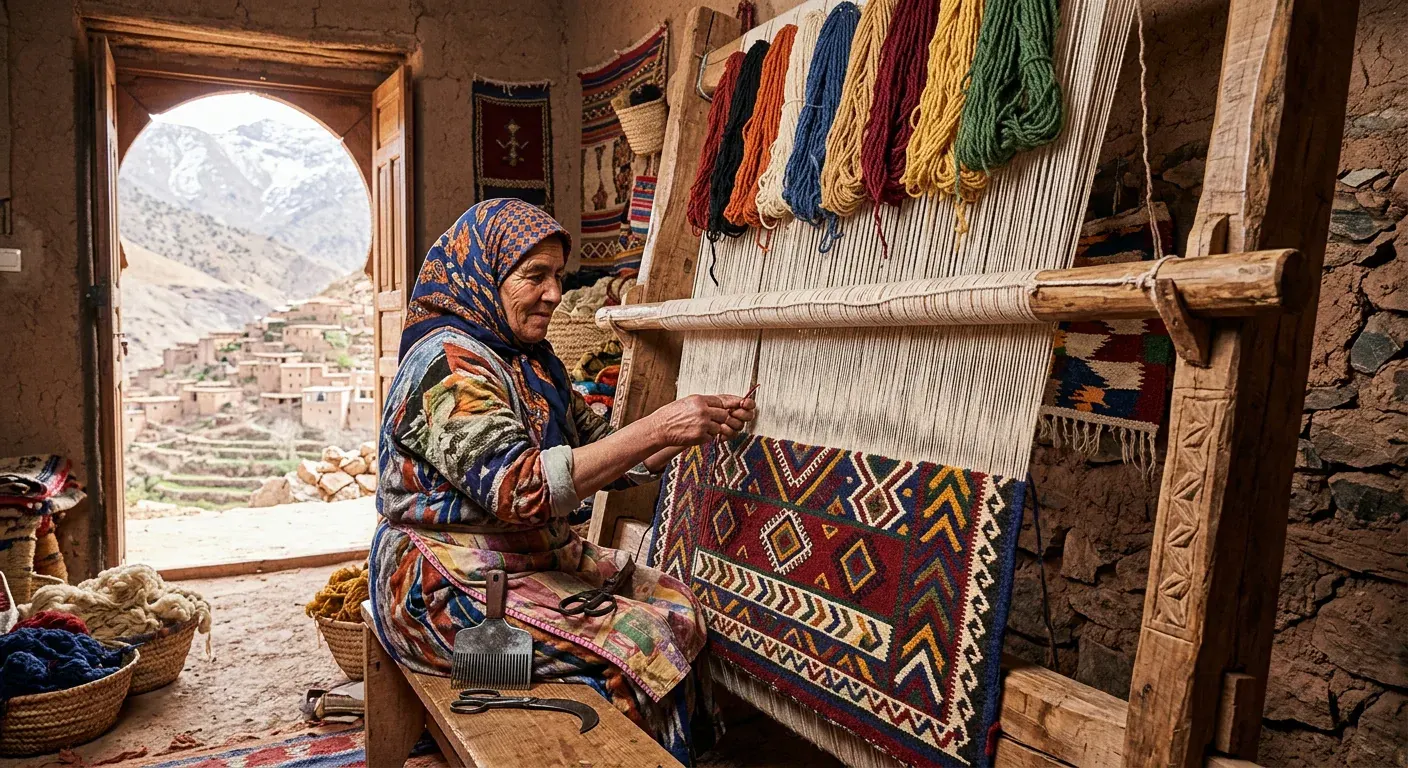
Some things are better bought here — cheaper, better made, and a memory of the trip. A cotton or wool djellaba is a versatile layer for the cool evenings and entirely at home in the medina. The town is known for its woven wool blankets and the natural dyes that colour them. Local leather sandals (babouches) are comfortable for pottering around the lanes. A local SIM card from Maroc Télécom, Orange or Inwi gives solid data coverage in town for around US$5–8.
Documents, money and tech essentials
- Passport valid for at least six months beyond your travel dates
- Travel insurance documents (print a copy and save a PDF offline in case of no signal)
- A debit card with low foreign transaction fees (Wise, Revolut and Charles Schwab all work well in Moroccan ATMs)
- A working float of MAD — plan to withdraw the equivalent of US$100–150 on arrival
- A universal power adapter (Morocco uses European type C/E plugs, 220V)
- A local SIM or an international data plan — handy for the trailheads beyond town
- Downloaded offline maps (Maps.me or Google Maps offline) for the medina, where GPS struggles among the tight blue lanes
For advice tailored to your dates, or a custom pre-trip document for your stay, see our Chefchaouen travel guides or explore our private tour options.
To pack for the season, check Chefchaouen weather by month.
Frequently asked
Can I wear shorts and vest tops in Chefchaouen?
Around your guesthouse terrace and on a hot summer afternoon, fine. Through the blue medina, near the Grand Mosque and on the Rif trails, it's worth covering shoulders and knees — not because there's a rule for visitors, but because it draws far less attention and is genuinely respectful in a small, conservative town. A light linen layer takes up almost no space and earns its place at 600m, where evenings turn cool.
What shoes are best for the blue medina and the hills?
Comfortable closed-toe walking shoes with grip are ideal. Chefchaouen's streets are steep, cobbled and stepped, and they grow slippery when damp; flip-flops are no help on the inclines. Trainers are perfect for the medina, and if you plan to hike out to Akchour or up to the Spanish Mosque, a light walking shoe or trail shoe with a worn-in sole is better still.
Do I need cash in Chefchaouen, or can I use cards?
Bring a mix, but lean toward cash. Some guesthouses and rooftop restaurants take Visa and Mastercard; small medina shops, market stalls, guides, taxis and the Akchour trailhead cafés are cash-only. ATMs cluster around the new town and the main square. Withdraw a working float when you arrive — aim for the equivalent of US$100–150 in MAD for the first few days.
How much luggage should I bring to Chefchaouen?
Less than you think. Laundry is easy — many guesthouses wash and dry for a few dirhams, and linen and cotton dry overnight. A medium carry-on or soft duffel is plenty. Overpacking becomes a real chore on the stepped blue lanes and the narrow guesthouse staircases, where wheels are useless and you carry everything up by hand.
What should I pack for a day hiking the Rif and Akchour?
Layers and water. Chefchaouen sits at around 600m and the trails climb higher, so a warm day can turn cool in shade or after the sun drops behind the peaks. Pack a fleece, a sun hat, high-SPF sunscreen and a refillable bottle. Closed shoes with grip matter on the rocky path to the waterfalls, and a small dry bag keeps your phone and camera safe near the spray at Akchour.
Is there anything I should definitely not pack for Morocco?
Alcohol in quantities that look like commercial import can be held at customs (personal amounts are generally waved through). Leave drones at home unless you hold a Moroccan civil aviation permit — they are controlled and confiscated on arrival without documentation. Prescription medication is fine; carry the original box and a GP letter for anything that might look controlled.
One less thing to worry about
We send every guest a bespoke pre-trip briefing.
It includes a packing checklist tuned to your dates and plans, the Rif weather forecast for your travel window, and our current notes from the blue city. Just ask.
Request an itinerary