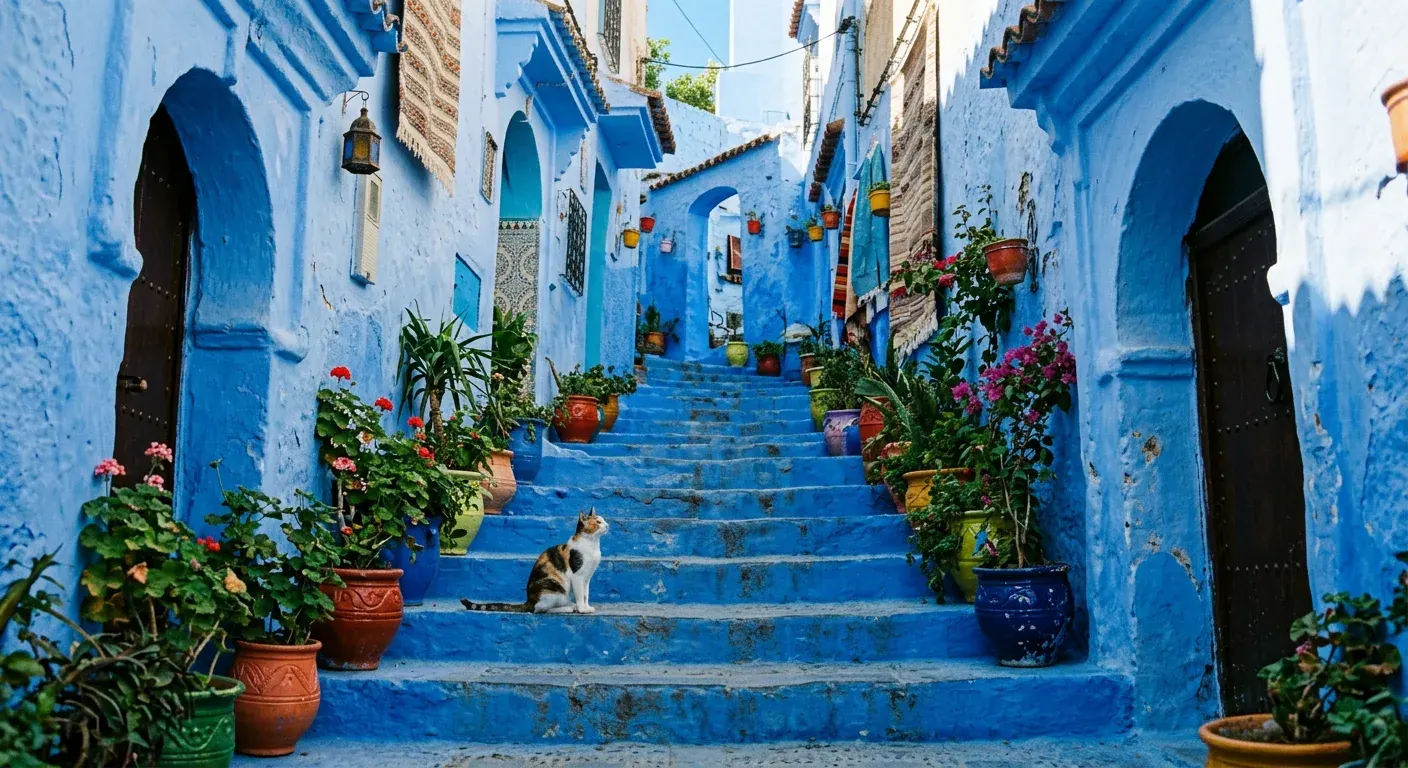
Chefchaouen is one of Morocco's most photographed places, and it more than lives up to the pictures. But the blue city is also a real, working mountain town with its own rhythms and quirks, and a little knowing-before-you-go goes a long way. This is our honest, welcoming guide to the things worth understanding first — from beating the midday crowds to what to pack, plus a couple of plain practical and safety notes we'd want a friend to hear.
It's become very popular — go early or near sunset
The honest truth first: Chefchaouen has become very popular, and the famous blue lanes are now a fixture on every travel feed. Through the middle of the day, the most photogenic corners fill with day-trippers and photographers, and the quiet, dreamlike streets you came for can be busy and hard to capture without a crowd in shot. The fix is simple and free: walk the medina early in the morning or near sunset. At first light the lanes are calm and the blue glows softly; in the late afternoon and evening, once the day visitors have gone, the town exhales and the photographs come easily. Staying overnight is the single best way to enjoy the Chefchaouen of the postcards.
It's small — one or two nights is usually enough
Chefchaouen is a small mountain town, not a sprawling city, and that shapes how long to stay. Its main pleasures — wandering the blue medina, climbing to the Spanish Mosque viewpoint, the kasbah, and a relaxed meal or two — fit comfortably into one or two nights for most visitors. An overnight is well worth it so you catch those quiet early mornings and evenings, but you rarely need longer than a couple of nights unless you're also heading out to walk in the surrounding Rif. It pairs beautifully as a two-night stop on a wider northern Morocco trip.
The lanes are steep, stepped and cobbled
The medina is built up a mountain slope, so expect steady climbs, frequent steps and uneven, cobbled lanes — there are very few flat stretches. It's part of the charm, but it has two practical consequences. First, wear good, grippy shoes: the cobbles are uneven and turn slick after rain, and you'll be on them up and down all day. Second, be realistic about mobility — the steps and slopes make Chefchaouen difficult for wheelchairs, prams and anyone with limited mobility. None of it is extreme for a steady walker, but it rewards a sensible pace and the right footwear.
It's cooler than the lowlands — pack layers
Because Chefchaouen sits high in the Rif, it is noticeably cooler than Morocco's lowland cities, and the evenings can feel cool or even cold — sometimes surprisingly so on summer nights once the sun drops behind the mountains. Pack layers: bring a warm top for the evenings on top of your daytime clothes, and something for rain in the wetter months. Don't assume that because the rest of Morocco is hot, the blue city will be too — a chilly evening here catches a lot of visitors out.
Bring cash — it has a cash-based feel
Chefchaouen has a more cash-based feel than the big cities. There are fewer ATMs, and many of the small guesthouses, cafés and craft stalls prefer — or only take — cash. It's simply wise to arrive with enough Moroccan dirham in your pocket so you're not hunting for a working machine up a steep lane. Draw out what you need before you come, or top up early in your stay.
Dress modestly — it's a traditional Rif town
For all its fame, Chefchaouen is a traditional Rif mountain town where people live ordinary lives. Dressing modestly — covering shoulders and knees — is respectful and appreciated, especially away from the busiest tourist lanes. It costs nothing and is warmly received, and it sits comfortably with the cooler mountain climate anyway.
Ask before photographing people
The blue lanes are irresistible to photograph, but remember they are also people's homes and workplaces. Respect locals' wishes about being photographed and ask first before pointing a camera at someone — a smile and a quick gesture is usually all it takes. Some residents would rather not appear in photos, and that's entirely their call. The streets, doorways and rooftops give you all the blue you could want without anyone having to be in frame.
A plain safety and legal note: the Rif and cannabis
One honest heads-up, stated plainly. The countryside around Chefchaouen is a well-known cannabis-growing region (locally kif, and hashish), and as a visitor you may at some point be approached by touts offering it, particularly in or near the medina. The important fact is this: cannabis is illegal in Morocco, and buying or using it carries real legal risk for travellers. There is nothing to weigh up here — the sensible, safe thing to do is to politely decline and not get involved. A firm, friendly "no, thank you" and walking on is all that's needed; there's no need to be rude, and no reason to engage. Treat it as you would any unwanted approach, and enjoy the town for what it is.
Quick things to know before you go
- Walk the blue lanes early morning or near sunset to avoid the midday crowds and get the calm, photogenic streets.
- It's a small town — one or two nights is usually enough.
- Lanes are steep, stepped and cobbled: wear grippy shoes; tough for wheels and limited mobility.
- It's cooler than the lowlands — pack a warm layer for the evenings, even in summer.
- Bring cash (dirham): fewer ATMs and a cash-based feel.
- Dress modestly in this traditional Rif town.
- Ask before photographing people, and respect a no.
- If offered cannabis, decline politely — it's illegal in Morocco and carries real legal risk.
If you'd rather have the logistics handled and a local with you who knows the quiet lanes and the right times to walk them, see our private tours and destinations guide for itineraries that fold Chefchaouen into a wider northern Morocco circuit.
For measured averages for every month (temperatures, rainfall, rainy days and sunshine), see Chefchaouen weather by month. The blue lanes are quiet after dark; see things to do in Chefchaouen at night.
Frequently asked
When are the blue streets of Chefchaouen least crowded?
Early morning and the hour or so around sunset. Chefchaouen has become a very popular, Instagram-famous town, and the most photogenic blue lanes fill up with day-trippers and photographers through the middle of the day. If you want quiet streets and soft light, walk them at first light or in the late afternoon and evening — that is when the medina feels calm and the photographs come easily, without crowds in every frame.
How many nights do I need in Chefchaouen?
For most visitors, one or two nights is plenty. Chefchaouen is a small mountain town rather than a sprawling city, and its main pleasures — wandering the blue medina, the Spanish Mosque viewpoint, the kasbah and a relaxed meal or two — fit comfortably into a day or so. Staying overnight is worth it because it lets you catch the quiet early mornings and evenings after the day-trippers leave, but you rarely need longer than a couple of nights unless you are also walking in the surrounding Rif.
Is Chefchaouen suitable for visitors with limited mobility?
It is challenging. The medina is built on a mountain slope, and its lanes are steep, stepped and cobbled, with very few flat stretches. That makes it difficult for wheelchairs, prams and anyone with significant mobility limitations, and even sure-footed walkers want grippy shoes because the cobbles turn slick after rain. If mobility is a concern, plan shorter routes, rest often, and choose accommodation near a gate rather than deep up the hill.
What should I pack for Chefchaouen's weather?
Pack layers, whatever the season. Chefchaouen sits high in the Rif mountains and is noticeably cooler than Morocco's lowland cities, and the evenings can feel cool or even cold — sometimes surprisingly so in summer once the sun drops. Bring a warm layer for the evenings on top of your daytime clothes, along with sturdy, grippy shoes for the cobbles and something for rain in the wetter months.
Do I need cash in Chefchaouen, and is it conservative?
Bring Moroccan dirham in cash. Chefchaouen has a more cash-based feel than the big cities, with fewer ATMs and many small guesthouses, cafés and craft stalls that prefer or only take cash, so it is wise to arrive with enough dirham. It is also a traditional Rif town, so modest dress — covering shoulders and knees — is respectful and appreciated, especially away from the most touristy lanes.
People offered me cannabis in Chefchaouen — what should I do?
Politely decline and don't get involved. The Rif region around Chefchaouen is a well-known cannabis-growing area, and visitors are sometimes approached by touts offering kif or hashish. Cannabis is illegal in Morocco, and buying or using it carries real legal risk for travellers, so the sensible and safe response is a firm, friendly no. There is no need to be rude — simply decline, keep walking, and enjoy the town for what it is.
See the blue city at its best
Let us show you the quiet Chefchaouen.
Early-light walks before the crowds, the best viewpoints, and a relaxed local pace — tell us when you're coming and we'll build a Chefchaouen visit around the calm hours.
Request an itinerary