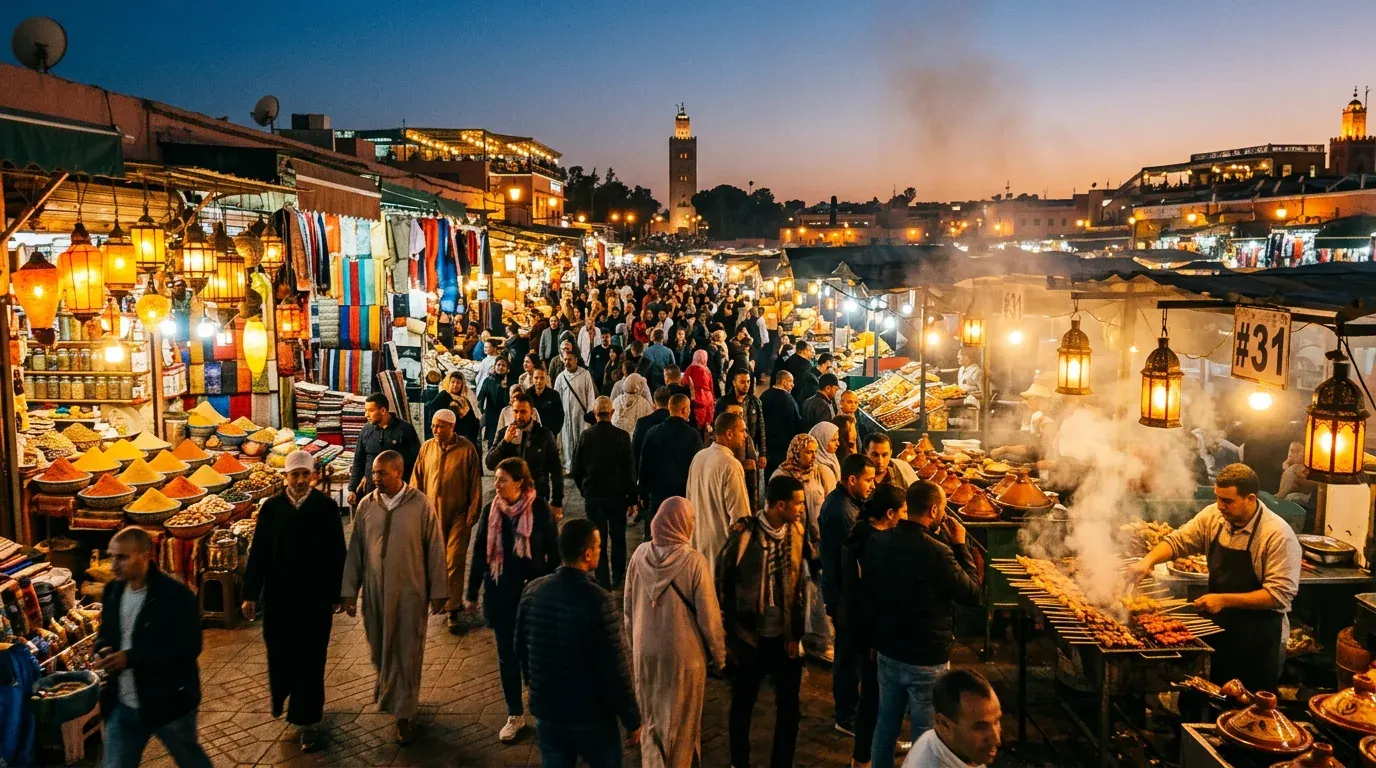
Spring (March–May) and autumn (September–November) are the best all-round times to visit Morocco — and for Chefchaouen in particular, when the Rif foothills are green, the indigo lanes glow in soft light and the Akchour trails run cool rather than scorching.
Season by season
Morocco is a year-round destination, but the experience shifts sharply with the calendar and the region. Sitting at around 600 metres in the Rif mountains, Chefchaouen runs cooler and greener than the imperial cities and the south — its own micro-rhythm worth understanding before you book.
- Spring (Mar–May): the sweet spot — wildflowers across the Rif, mild blue-city days, full-flow Akchour waterfalls.
- Summer (Jun–Aug): warm but bearable in the mountains while Marrakech and the south top 40°C; busy weekends, lively medina evenings.
- Autumn (Sep–Nov): a second peak — stable weather, clear photography light over the medina, comfortable hiking in Talassemtane.
- Winter (Dec–Feb): cool, quiet and atmospheric; rain showers deepen the blue walls, and the Rif peaks can dust with snow.
Best time by region
For Chefchaouen itself, spring and autumn are the photographer's dream — soft, raking light on the indigo medina and the Spanish Mosque viewpoint without summer haze. For hiking Akchour and Talassemtane, April to June and September to October balance flowing water with safe, dry trails; midwinter can bring slick, muddy paths and short days.
If you are combining the blue city with the wider north, Tangier, Tetouan and the Mediterranean coast are pleasant most of the year. Spring and autumn also suit the long road approaches from Fes (around four hours) and Tangier (around two hours) without summer heat baking the car.
Things that move the dates
Ramadan shifts each year (it falls in the late-February-to-March window through the late 2020s) and changes the rhythm of the day — many Chefchaouen cafes and restaurants adjust hours, though guesthouses and tours run normally. Local moussems and the relaxed pace of the medina mean weekends and Moroccan public holidays fill the small old town quickly; arrive early or stay overnight to have the blue lanes to yourself at dawn.
Frequently asked
What is the cheapest time to visit Chefchaouen?
Midwinter (outside the holidays) and the quiet weeks of late autumn bring the lowest guesthouse rates in the blue city. June and November sit just outside the busy spring and summer peaks and offer good value with comfortable mountain weather.
When is it too hot in Chefchaouen?
Chefchaouen's mountain altitude keeps it cooler than inland Morocco, but July and August midday can still feel strong in the open medina squares. Walk the lanes early and late, and save the steeper Akchour hikes for the cool of the morning.
Is December a good time to visit Chefchaouen?
Yes if you want quiet, atmospheric lanes and low prices — but pack warm layers and a waterproof. Rif evenings are cold, winter rain is common, and showers leave the blue walls glistening for moody photographs.
Planning a trip?
Let our team handle the details.
Tell us your dates and style and we'll send a written itinerary and a transparent quote within 24 hours.
Request an itineraryKeep reading
Planning
Is Morocco Safe to Visit?
Yes — Morocco is one of the safest and most welcoming countries in North Africa for travellers, and Chefchaouen is among the gentlest stops of all: a small, walkable mountain town where the main day-to-day issues are mild hassle and the occasional overcharge, both easily managed.
Planning
Morocco Travel Costs & Budget
Morocco can be done on almost any budget, and Chefchaouen is one of the better-value stops. Mid-range travellers spend roughly US$60–120 per person per day in the blue city; private, guesthouse-based trips with a driver for the road approaches typically run US$180–350+ per day depending on season and style.