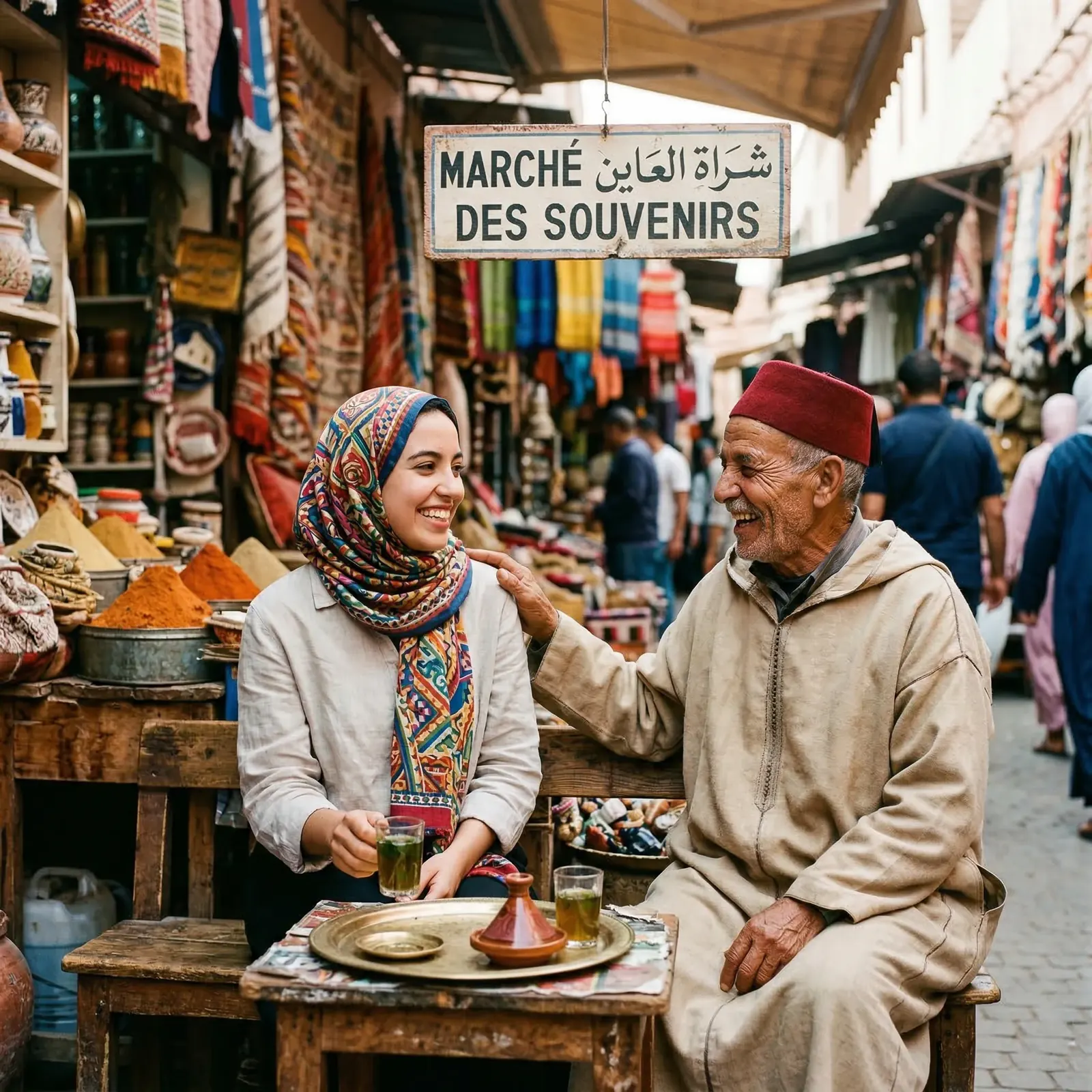
Moroccan cuisine is one of the world's great food cultures: slow-cooked tagines, couscous Fridays, fresh-grilled seafood on the coast, and the endless ritual of sweet mint tea.
Dishes to seek out
Beyond the famous tagine and couscous, a few specialities reward the curious eater.
- Tagine — slow-cooked stews (lamb with prunes, chicken with preserved lemon and olives, kefta with egg), the staple of Chefchaouen's home-style restaurants.
- Bissara — the warming split-pea or fava-bean soup, drizzled with olive oil and cumin, a Rif breakfast and cold-evening favourite in the blue city.
- Goat's cheese — Chefchaouen and the surrounding Rif are known for soft local jben, lovely with honey and fresh bread.
- Couscous — traditionally the Friday family meal, steamed with seven vegetables.
- Harira — the hearty tomato-lentil soup that breaks the fast in Ramadan.
- Street snacks — msemen and harcha pancakes, fresh orange juice and almond pastries around Plaza Uta el-Hammam.
The tea ritual
Mint tea — green tea, fresh mint and plenty of sugar, poured from height — is the thread running through Moroccan hospitality. In Chefchaouen you'll sip it on a blue-washed terrace overlooking the medina or at a cafe table on Plaza Uta el-Hammam, and accepting it graciously is part of the experience.
Eating well and safely
Morocco is largely Muslim, and conservative Chefchaouen is drier than the big cities — alcohol is hard to find, served only at a handful of hotels rather than in medina restaurants. Tap water is best avoided for drinking — choose bottled. Busy places with high turnover are usually the safest (and tastiest) eating. Vegetarians do well: bissara, vegetable tagines, salads and couscous are everywhere.
Frequently asked
What is the national dish of Morocco?
Couscous and tagine are the two contenders. Couscous is the traditional Friday family meal; tagine — the slow-cooked stew named after its conical earthenware pot — is eaten across the country in countless variations.
Can you drink alcohol in Chefchaouen?
Only just. Chefchaouen is a conservative mountain town and largely dry — alcohol is limited to a few hotels rather than medina restaurants and cafes. If a drink with dinner matters to you, check your accommodation in advance or save it for the bigger cities.
Is Moroccan food good for vegetarians?
Very. Vegetable tagines, couscous, lentil soups, salads, bread and an abundance of fruit make Morocco one of the easier countries to travel as a vegetarian.
Planning a trip?
Let our team handle the details.
Tell us your dates and style and we'll send a written itinerary and a transparent quote within 24 hours.
Request an itineraryKeep reading
Culture
Morocco Etiquette & Customs
A little cultural awareness goes a long way in Morocco. Dress modestly, greet warmly, ask before photographing people, use your right hand, and embrace the unhurried pace of mint tea and conversation.
Planning
The Best Time to Visit Morocco
Spring (March–May) and autumn (September–November) are the best all-round times to visit Morocco — and for Chefchaouen in particular, when the Rif foothills are green, the indigo lanes glow in soft light and the Akchour trails run cool rather than scorching.