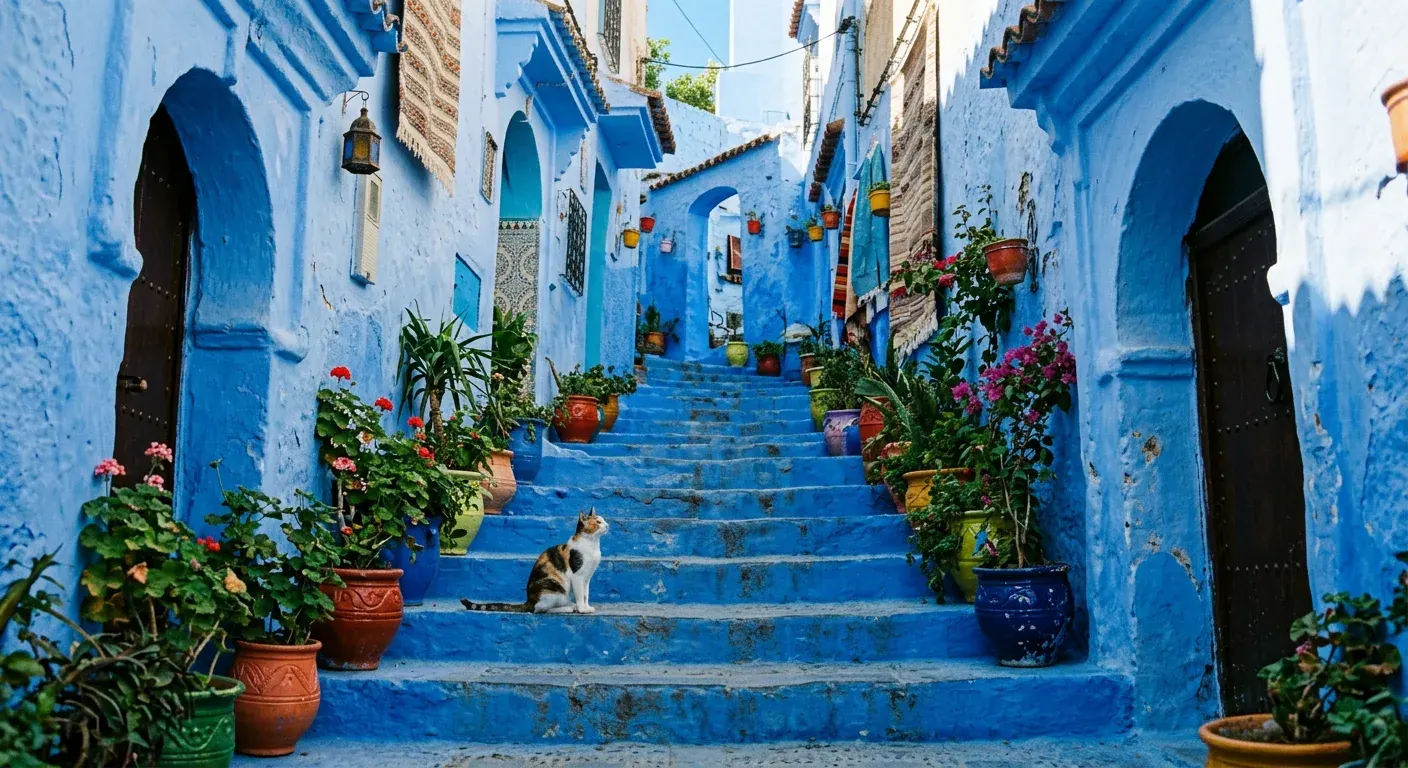
Most people picture Morocco as heat and sun, so winter in Chefchaouen catches them off guard. The blue city is a mountain town — perched at around 600 metres in the Rif of northern Morocco — and that altitude changes everything. From roughly December to February the lanes turn cool, often cold and frequently wet, with the heaviest rain of the year, chilly mornings, cold nights and clouds that settle into the valley as atmospheric mist. It is not the warm getaway the brochures imply. But for travellers who come for atmosphere over sunshine, winter has a quiet, moody magic that the busy months simply cannot offer. This is our honest read, based on typical seasonal norms rather than any one year's weather.
What winter actually feels like
Expect daytime highs broadly in the low teens Celsius — cool rather than freezing by day — but mornings are chilly and nights get cold, so the swing between midday and after dark is real. This is the rainiest stretch of the Chefchaouen year, so pack for showers and damp cobbles, and plan around the weather rather than fighting it. The flip side is the mood: low winter light and grey, brooding skies deepen and saturate the famous blue walls, and the mist that rolls down off the Rif gives the early mornings a soft, painterly quality you will not find in high summer.
Snow is part of the picture, but a small one. Cold spells can dust the surrounding Rif peaks with snow, which looks striking rising above the blue medina, but it rarely settles in the lanes themselves and is never reliable. If you get it, treat it as a happy accident rather than the reason for the trip.
The upside: quiet, cheaper, atmospheric
Here is why winter is underrated. The day-trip coaches thin right out, so the blue lanes feel genuinely local — you can wander the medina and photograph its cobalt-to-periwinkle walls without weaving through crowds. Guesthouse prices tend to be lower than in the spring and autumn peaks, and the whole town runs at a slower, more local rhythm. For photographers and slow travellers who value solitude and mood over guaranteed blue skies, this is the blue city at its most evocative.
The catch: cold rooms and limited heating
The single biggest thing to plan for is indoor cold. Many of the small guesthouses and riads inside the old medina are traditional stone buildings that hold the chill, and heating is often limited — sometimes a portable heater in the room rather than central heating throughout. Before you book, ask exactly what heating is provided, request extra blankets, and pack thermal layers for sleeping. A hot-water bottle is a small thing that makes a cold Rif night much more comfortable. This is not a reason to skip winter; it is simply something to sort out in advance rather than discover on arrival.
The Akchour waterfalls in winter — a real caution
The Akchour waterfalls hike is one of the area's great walks, but it needs care in winter. After heavy rain the trails can be muddy and slippery, water levels run high, and river crossings can become difficult or even dangerous. In a settled, drier winter spell the hike can still be rewarding — and beautifully quiet — but conditions change fast. Always check the current state of the trail locally before you set out, consider going with a guide, and be ready to turn back. Never attempt to cross fast-flowing or rising water. The waterfall will still be there next season.
What to pack for a Chefchaouen winter
- Warm layers — a couple of insulating layers you can build up and peel off, for the swing between cool days and cold nights.
- A proper waterproof — this is the wettest season; a rain jacket and a small umbrella both earn their place.
- Shoes with grip — the steep, cobbled lanes get slick in the rain, so sure-footed footwear matters.
- Hat, gloves, scarf — for chilly mornings, cold nights, and snow on the peaks if you are lucky.
- Layers for indoors too — with heating often limited, thermals for sleeping and a hot-water bottle go a long way.
The honest verdict
Chefchaouen in winter is cosy, quiet and moody rather than warm. Come for the atmosphere — the saturated blue walls under grey skies, the misty mornings, the empty lanes and the lower prices — and dress for cold and wet, not sun. If that is the trip you want, it is one of the most rewarding times to have the blue city largely to yourself. See our private tours and get in touch and we'll help you build a winter itinerary around Chefchaouen at its quietest and most atmospheric.
For measured averages for every month (temperatures, rainfall, rainy days and sunshine), see Chefchaouen weather by month.
Frequently asked
What is the weather like in Chefchaouen in winter?
Cool and often wet. Chefchaouen sits at roughly 600 metres in the Rif mountains, so winter (broadly December to February) runs colder and damper than lowland Morocco. Daytime highs are typically only in the low teens Celsius, mornings are chilly and nights are cold, and this is the rainiest stretch of the year. You also get atmospheric misty mornings as cloud sits in the valley. Treat these as seasonal norms rather than a forecast for any one day, and check conditions close to your trip.
Does it snow in Chefchaouen?
Occasionally on the surrounding Rif peaks, rarely in the lanes themselves. Snow can dust the higher mountains around the town during cold winter spells, which looks striking above the blue medina, but it seldom settles in Chefchaouen's streets and never reliably. If you are hoping for snow, treat it as a lucky bonus rather than something to plan a trip around.
Is winter a bad time to visit the blue city?
Not at all — it is just a different trip. Winter is much quieter, with few tour groups, so the blue lanes feel genuinely local and you can photograph them without crowds. The deep blue walls look especially striking against moody grey skies and low winter light, and prices for guesthouses tend to be lower. The trade-off is cold, wet, short days, so come for atmosphere and solitude rather than warmth, and dress for it.
Do guesthouses in Chefchaouen have heating?
Often only limited heating, so ask before you book. Many of the small guesthouses and riads in the old medina are traditional stone buildings that hold the cold, and heating can be partial — a portable heater in the room rather than central heating. Confirm what is provided, ask for extra blankets, and a hot-water bottle or thermal layers for sleeping are worth packing for a winter stay.
Can you still hike the Akchour waterfalls in winter?
Sometimes, but with real caution. After heavy winter rain the Akchour trails can be muddy and slippery, water levels run high, and river crossings can become difficult or even dangerous. In settled, drier winter spells the hike can still be rewarding and quiet, but always check current conditions locally, go with a guide if you are unsure, and be willing to turn back. Never push on across fast or rising water.
What should I pack for Chefchaouen in winter?
Warm layers and waterproofs. Bring a warm insulating layer or two, a waterproof jacket, and shoes with good grip for cobbles that get slick in the rain — the medina is steep. Add a hat, gloves and a scarf for cold mornings and nights, and pack for indoor cold too, as guesthouse heating is often limited. Quick-drying layers and an umbrella round out a winter kit for the blue city.
Plan it right
We'll plan your quiet winter escape to the blue city.
Empty lanes, moody blue walls and lower prices — tell us when you can travel and we'll build a warm, well-planned winter itinerary around Chefchaouen at its most atmospheric.
Request an itinerary