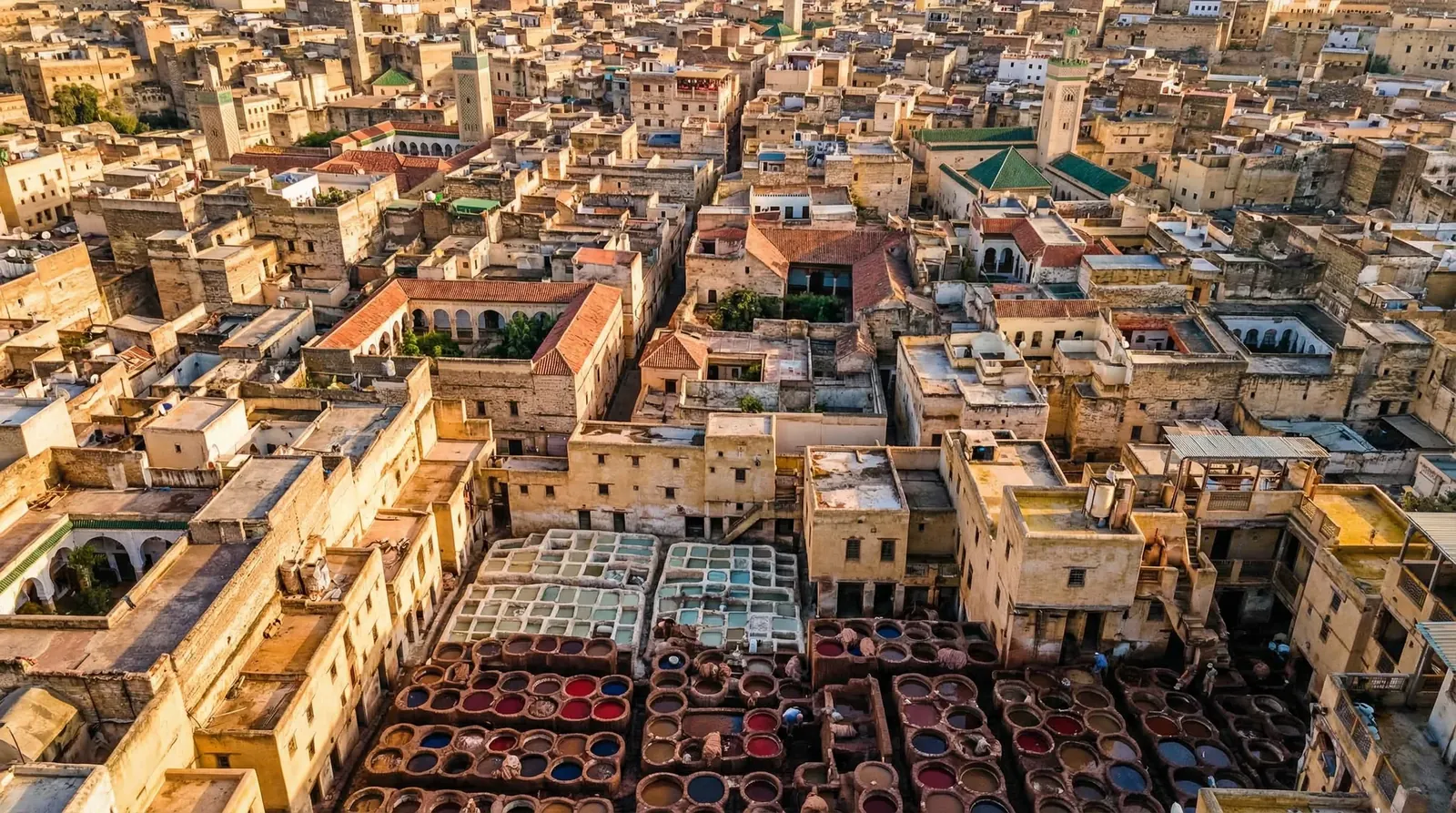
Fes el-Bali is a UNESCO World Heritage site and, by many measures, the most complete medieval city still standing. Founded in 789 CE, it is older than most European capitals. To walk it for the first time is to give in a little — you will be lost, and you will be spellbound, and the two feelings arrive together.
The case for a licensed guide
We put this gently but plainly: on a first visit, take a licensed guide. The medina runs to more than 9,000 streets, many of them dead ends, and the signage is sparse by design — the city was built for people who already knew it by heart. A licensed guide (recognised by an official badge from the Ministry of Tourism) does three things no map can: they lead the logical circuit so the highlights fall in order, they open private workshops and family courtyards, and they soak up the constant attention of unofficial touts so you do not have to. Budget US$60–100 for a full day; we arrange it as part of every Fes itinerary.
The tanneries of Chouara
The Chouara tannery may be the most photographed sight in all Morocco — a honeycomb of stone vats filled with dye and pigeon dung that has cured leather here since the 11th century. You take in the scene from leather-shop terraces on the rim above. The shops will usher you up and hand you a sprig of fresh mint for the nose (the smell of the vats is no small thing). There is no obligation to buy, though the leather here is among the country's finest and fairly priced at the source.
Come before 11:00 for the best light and the fullest vats — afternoon sun flattens the colour and the workers often pause. Your guide will time it for you.
The Qarawiyyin — the world's oldest university
Founded in 859 CE by Fatima al-Fihri, the University of al-Qarawiyyin has a strong claim to being the oldest continuously operating university anywhere — two centuries older than Oxford. Non-Muslims cannot enter the mosque, but the intricately carved cedar doorways visible from the lane, and the glimpse of the courtyard fountain through wrought-iron grilles, are among the loveliest sights in the city. Stand quietly and let the geometry of the tilework settle.
Beside it, the restored Nejjarine fountain and caravanserai hold a fine woodwork museum. Fifteen minutes on the museum rooftop buys you an aerial read of the medina that no street-level photograph can match.
Getting gloriously lost
Once the structured morning with a guide is done, ask them to leave you at the edge of the Andalusian quarter — the quieter, less-trodden half of the medina across the river — and give yourself two hours with no plan. Here there are fewer tourists, gentler vendors, neighbourhood bakeries where locals queue with unbaked dough on wooden boards (the communal oven turns it out for a few dirhams), and the kind of alley views no app will ever route you through.
When you are ready to surface, any local will point you to Bab Rcif or Bab Guissa within a minute. Getting lost in Fes is safe; getting truly stuck is impossible.
Where to stay and what to eat
Stay inside the medina in a riad — the jump from the narrow lane outside to the light-filled courtyard within is the defining Fes moment. We keep a shortlist of riads restored with care rather than haste; ask us when you enquire about a Fes destination itinerary.
On the plate, Fes is the culinary heartland of Morocco. Pastilla — a flaky pie of pigeon or chicken with almonds and a dusting of icing sugar — is a Fassi invention; order it as a starter on one of the rooftops above the Bou Inania Medersa. For lunch, have your guide lead you to a neighbourhood place where the set menu (harira, a main, mint tea) comes in under 80 MAD. Skip the tourist-facing restaurants on Rcif Square — same food, three times the price.
The best time to visit — and the natural northern pairing
March to May and September to November bring the ideal conditions — mild days of 18 to 26 °C, beautiful light for photography and smaller crowds than the European peak. Fes in July and August can hit 40 °C with little shade in the tight streets. Winter (December to February) turns cold and sometimes wet, but deeply atmospheric, with wood-smoke curling from the hammam chimneys and the medina at its most hushed.
Fes also pairs beautifully with the blue city. A scenic four-hour drive north through the Rif links it to Chefchaouen, whose altitude keeps it a little cooler in summer — many guests follow the dense medieval intensity of Fes with a few unhurried days in the indigo lanes of the north.
Frequently asked
Do you need a guide to explore the Fes medina?
For a first visit, a licensed guide is strongly advised. The medina holds more than 9,000 lanes and almost no obvious landmarks beyond the minarets. A good guide threads the tanneries, the Qarawiyyin quarter and the artisan streets into a logical loop — without one, most newcomers spend their opening hours thoroughly lost.
How much does a private guide in Fes cost?
Budget US$60–100 for a full day with a licensed private guide, depending on how much ground you cover and whether they open up private workshops. Half-days run US$40–60. Steer clear of the unlicensed 'students' who approach in the street — they earn from shop commissions, not from you.
How much time do you need in the Fes medina?
One full day reaches the highlights: the tanneries, the Bou Inania Medersa, the surrounds of the Qarawiyyin, the Nejjarine fountain and a wander through the dyers' and weavers' quarters. A second day lets you slow right down, take a cookery class and cross to the quieter Andalusian quarter over the river. Many guests then pair Fes with the blue city of Chefchaouen, a four-hour drive north through the Rif.
Can you see the tanneries for free?
The famous Chouara view is reached from the terraces of the leather shops on the rim — you are expected to step inside, and you will usually be handed a sprig of mint for the smell. You are under no obligation to buy, and a polite decline of tea is fine. A few shops above Sidi Moussa also offer free rooftop views.
Is Fes safe for solo travellers?
Yes. The medina is generally safe by day. The main irritation is the steady stream of unofficial 'guides' offering help. A friendly but firm 'no thank you, I have a guide coming' usually ends it. In the busiest lanes, keep your bag held to the front.
What is the best time of year to visit Fes?
March to May and September to November are the pick — mild temperatures, lovely light and fewer coach groups. Summer (June to August) is fierce in Fes, often nudging 40 °C, with little shade in the streets. Winter days can be cold and damp but pleasingly uncrowded; the cooler blue city to the north sits at altitude and stays a touch milder in the heat.
Ready to explore Fes?
We'll arrange a medina guide and the right riad.
Every Chefchaouen Blue City Tours Fes programme includes a curated medina day with a Fes guide, riad accommodation chosen for restoration quality, and a local restaurant shortlist — and we can carry the journey on to the blue city of Chefchaouen if you want the north in one trip.
Request a Fes itinerary