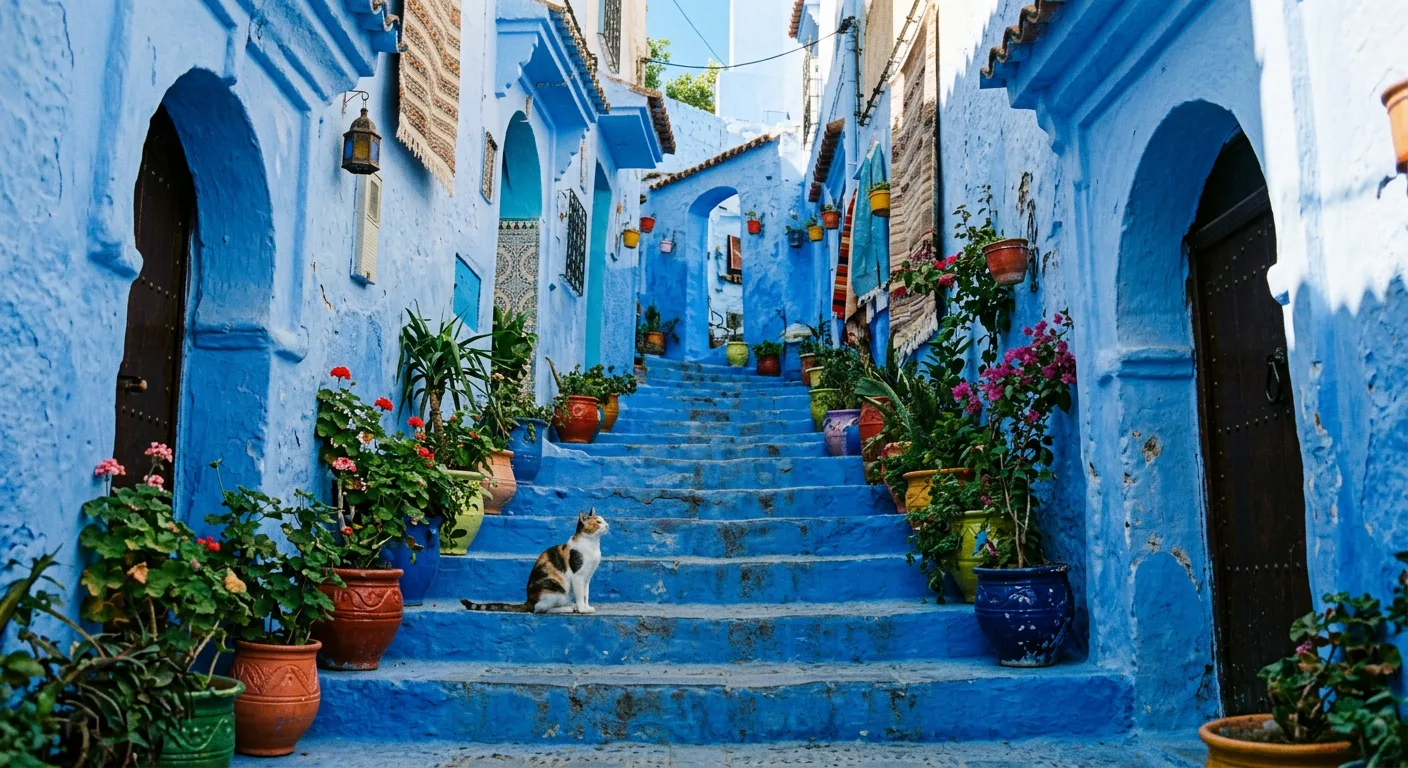
The short, honest version: Chefchaouen is generally one of the calmer, safer-feeling places to visit in Morocco, including for solo travellers and for women, and most people have an easy, relaxed time. The things actually worth managing are small and ordinary — the kif and hashish you'll be offered in this cannabis-growing corner of the Rif (just decline), a few faux-guide hustles, the steep slippery cobbles, and basic caution if you hike out to the Akchour waterfalls. None of it should put you off; it just helps to know it before you go. What follows is the full picture, hedged honestly where things vary from person to person and day to day.
Is Chefchaouen safe for tourists overall?
By the standards of Moroccan travel, Chefchaouen feels notably low-pressure. It is a small mountain town rather than a sprawling imperial city, the medina is compact and used to visitors, and the selling is gentler than the full-tilt souks of Marrakech or Fes. Serious crime against tourists is rare. What you might run into is ordinary and minor: occasional pickpocketing in the busiest lanes, being quoted an inflated price, or a tout attaching himself to you. Keep your valuables zipped away and your wits about you in crowds, the same as in any tourist town, and the odds are firmly in your favour. We can't promise nothing will ever go wrong anywhere — but the base rate here is reassuring.
Is Chefchaouen safe for solo travellers?
Yes, for most people. Solo travellers tend to find Chefchaouen one of the easier Moroccan stops to navigate alone: it's walkable end to end, you're rarely far from a busy café or square, and the slower pace makes it simple to get your bearings. Stay in the medina or just outside it, keep to well-used routes after dark, and you'll likely spend more energy choosing which blue lane to photograph than worrying about safety. As ever when travelling alone, let someone know your rough plan if you head into the hills, and don't rely on a phone signal once you're deep on the trails.
Is Chefchaouen safe for women and solo female travellers?
Many women travel here solo and describe it as more relaxed than Morocco's larger cities — less of the persistent attention, a calmer street feel. That is the common report rather than a universal rule: some unwanted comments or staring can still occur, as they can across the country, and individual experiences genuinely differ. A few habits help and cost nothing. Dress modestly out of respect for what is still a traditional Rif town — shoulders and knees covered, especially away from the most touristy lanes. Stick to the livelier streets in the evening, project quiet confidence, and don't feel obliged to engage with anyone who won't take a polite no. Treated that way, it's a comfortable destination for women by Moroccan standards.
What about the kif and hashish you'll be offered?
This is the question we get most, so here's the straight answer. The Rif region around Chefchaouen is one of the most famous cannabis-growing areas in the world, and as a visitor you may well be offered kif or hashish — usually a quiet word in the medina, and more openly along the path to the Akchour waterfalls. It is not aggressive, and it is not dangerous in itself. The sensible response is simply to decline politely and keep walking.
Why decline? Cannabis is illegal in Morocco, and for foreigners, buying, carrying or using it carries genuine legal risk — the kind that can turn a holiday into a serious problem. There's also the possibility of being overcharged, pressured or set up by an opportunist. None of this calls for rudeness or alarm; a friendly, firm 'no, thank you' is completely normal and understood here, and the person will move on. We cover this and the town's other quirks in our things to know before visiting Chefchaouen guide.
Common scams and hustles to know
Nothing here is unique to Chefchaouen, and none of it is common, but it's worth recognising:
- The friendly faux guide. Someone offers to walk you to 'the best blue street' or 'the photo spot', then expects payment. If you don't want a guide, decline warmly at the start rather than after you've followed along.
- Trail 'helpers' at Akchour. Self-appointed guides may attach themselves on the waterfall path. Agree clearly up front whether you want (and will pay for) help, or politely decline — the main route is straightforward to follow.
- Taxi and transfer pricing. Grand taxis and drivers don't always run a meter, so agree the fare before you set off rather than negotiating at the end.
- Photographs of people. Not a scam, but a courtesy — and occasionally someone will ask for a tip after a posed photo. Ask before photographing residents, and respect a no. It's a living town, not a backdrop.
Is it safe to walk around at night?
The heart of the medina around Plaza Uta el-Hammam stays sociable into the evening, with families out, cafés open and other visitors about, and it's pleasant to wander. Later on the lanes thin out, and the steep upper alleys become dark and very quiet. Stick to the well-trodden routes, carry a phone light for the uneven cobbles, keep valuables out of sight, and you'll be fine. If you're nervous, plan your evening stroll for the earlier, busier hours rather than late night.
Is hiking around Chefchaouen safe?
The big draw is the Akchour waterfalls and God's Bridge in Talassemtane National Park, and on a fine day it's a rewarding, popular hike that plenty of ordinary travellers do without issue. The risks are the everyday outdoor ones rather than anything sinister: wear proper shoes for rock and mud, carry enough water, start early in the summer heat, and take real care near the river after heavy rain, when water levels can rise. The higher falls are further and steeper than many expect, the phone signal is patchy, and it's easy to lose track of time — so it's worth going with a local guide or as part of an organised Akchour day trip, and not pushing deep into the hills alone. For the wider set of excursions, see the best day trips from Chefchaouen.
Health, water and the cobbles
Honestly, the most likely way to hurt yourself in Chefchaouen is a slip on the steep, polished cobbles — they turn slick after rain, so grippy shoes earn their place. Stick to bottled or properly filtered water rather than the tap, as you would across Morocco. The mountain air runs cooler than the lowlands and evenings can be chilly even in summer, so pack a warm layer. Pharmacies in town handle minor needs; for anything serious, the larger hospitals are down in Tetouan. As with any trip, travel insurance and your usual medications are worth sorting before you arrive — we won't quote specifics that change.
How does it compare with Marrakech and Fes?
Most travellers come away feeling Chefchaouen is calmer and less stressful than either big city — the selling is softer, the medina is easy to navigate rather than a maze, and the crowds are smaller. It is not a different planet, and the same common-sense precautions apply, but if the hustle of Marrakech or Fes is what worries you, the blue city tends to be a gentle antidote. For the country-wide view — solo and women travellers, the classic souk set-ups, areas to know about, and road and health notes — read our honest is Morocco safe guide alongside this one.
Sensible precautions, in short
- Keep valuables zipped away and out of sight in busy lanes.
- Decline kif and hashish politely — it's illegal and risky for foreigners.
- Settle taxi fares and any guide arrangement before you start, not after.
- Dress modestly out of respect for a traditional Rif town.
- Wear grippy shoes for the cobbles; stick to busier routes after dark.
- For Akchour, go early, carry water, and consider a guide or organised day trip.
- Drink bottled or filtered water; pack a warm layer for evenings.
Frequently asked
Is Chefchaouen safe for tourists?
For most visitors, yes — Chefchaouen is generally considered one of the calmer, lower-pressure towns in Morocco. It is small, walkable and used to travellers, the selling is gentler than in Marrakech or Fes, and violent crime against tourists is rare. The honest caveats are ordinary ones: occasional petty theft or overcharging, a few faux-guide hustles, steep slippery cobbles, and the cannabis offers that come with being in the Rif. Take normal city-travel precautions and the great majority of people have an easy, relaxed visit. No destination is risk-free, so this is guidance, not a guarantee.
Is Chefchaouen safe for solo female travellers?
Many women travel to Chefchaouen solo and describe it as more relaxed than Morocco's big cities — less aggressive attention and a gentler pace. That said, some unwanted comments or staring can still happen, as they can anywhere in the country, and experiences genuinely vary. The usual advice helps: dress modestly out of respect for a traditional Rif town (shoulders and knees covered), stick to the busier lanes after dark, trust your instincts and walk on from anyone persistent. We'd treat it as a comfortable solo-female destination by Moroccan standards rather than a place with no hassle at all.
Is it safe to walk around Chefchaouen at night?
The central medina around Plaza Uta el-Hammam stays lively into the evening and feels comfortable to walk, with families, cafés and other visitors about. Later at night the lanes empty out and the steep upper alleys get dark and very quiet, so it's sensible to stick to the well-trodden routes, carry a phone light for the uneven cobbles, and not wander alone into the unlit edges of the old town. As anywhere, keep valuables out of sight. Most evenings pass without any trouble.
People keep offering me hashish in Chefchaouen — is that a problem?
The Rif around Chefchaouen is a well-known cannabis-growing region, so visitors are sometimes offered kif or hashish in the medina and especially on the Akchour trail. The simplest and safest response is to decline politely and keep walking. Cannabis is illegal in Morocco, and for foreigners buying or carrying it carries real legal risk, plus the possibility of being set up or pressured. There is no need to be rude — a friendly, firm 'no, thank you' is understood and respected, and it won't spoil your day.
Is hiking to the Akchour waterfalls safe?
The Akchour waterfalls and God's Bridge in Talassemtane National Park are a popular and rewarding hike, and on a normal day in good weather it's a straightforward riverside walk for reasonably fit people. The sensible precautions are real ones: wear proper shoes for rock and mud, carry water, start early in summer heat, and be cautious near the river after heavy rain when levels can rise. The upper falls are further and steeper than people expect, phone signal is patchy, and it's easy to misjudge time, so consider going with a local guide or on an organised day trip and don't push deep into the hills alone.
Is Chefchaouen safer than Marrakech or Fes?
Most travellers find Chefchaouen calmer and less stressful than Marrakech or Fes — there's far less of the relentless souk selling and labyrinthine navigation, the crowds are smaller, and the overall feel is gentler. That doesn't mean it's risk-free; the basic precautions you'd take anywhere in Morocco still apply. For the national picture on safety, scams, women and solo travellers, our honest country-wide guide goes deeper.
Travel it the easy way
We'll make the blue city a calm, well-handled visit.
A driver who knows the road, trusted guesthouses, and a guided Akchour day if you want the waterfalls without the guesswork — tell us your dates and we'll take the friction out of Chefchaouen.
Plan your visit