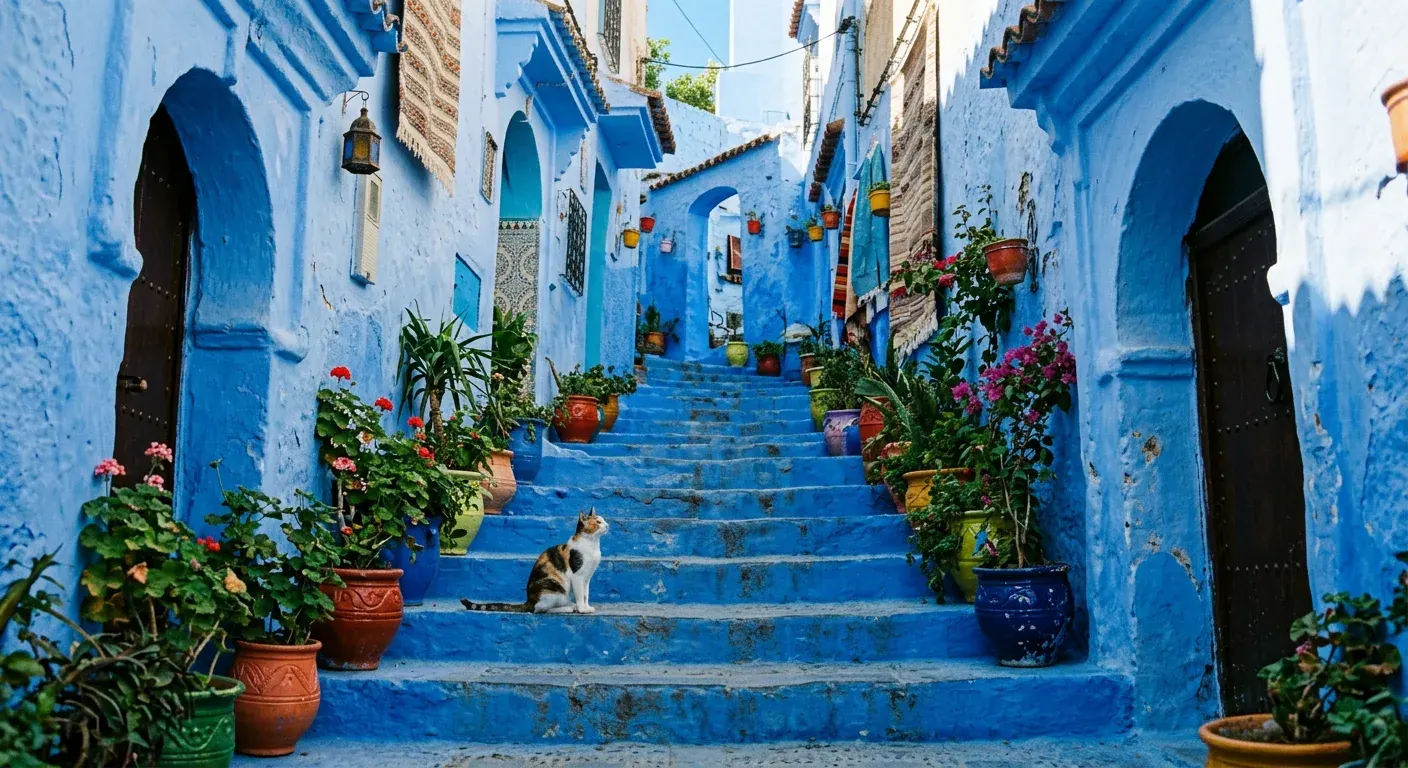
Chefchaouen's big weekly market runs on Mondays and Thursdays, when Berber farmers from the surrounding Rif villages come down to sell produce in the open ground below the medina, near Bab el-Ain. It is a working food-and-farm market — goat cheese, figs, olives, olive oil, mountain honey, herbs and wool — rather than a souvenir bazaar, and it is at its best in the morning. Go early, bring small cash, and ask before you photograph anyone. This is where the blue town does its real shopping, and it is one of the most honest, un-staged things to see in Chefchaouen.
Souk days
Mondays & Thursdays
Where
Below the medina, near Bab el-Ain
Best time
Mid-morning, before it packs up
What to bring
Cash in small notes, a bag
What days is the souk in Chefchaouen?
The two market days everyone means are Monday and Thursday. Those are the mornings the regional open-air market reaches full size, as growers and herders from the Jebala and Ghomara villages across the Rif bring in what they have. On the other mornings there is still a smaller produce market and the town's daily shops, but if you specifically want the big souk scene — the crowds, the tarps, the mounds of figs and the bleating at the livestock end — aim for a Monday or a Thursday. As with anything tied to the religious calendar, days can shift around major holidays, so confirm with your guesthouse if your visit is short and the market is the reason for it.
Where exactly does it set up?
Not in the postcard part of town. The market spreads across the open ground and streets below the medina walls, around Bab el-Ain and the area near the post office in the lower, newer town. From Plaza Uta el-Hammam you simply walk downhill out of the blue quarter and follow the noise — it is about a ten-minute walk, and you will know you have arrived when the cobbled lanes give way to tarpaulins, crates and a press of people. Keep your bearings: it is easy to get absorbed and lose the medina gate, so note which way is uphill back into the old town.
What's actually on the stalls
This is a farmers' market first. Expect:
- Fresh goat cheese (jben) — the Rif staple, sold by the people who make it, best eaten the same day.
- Figs, olives and olive oil — the mountain orchards' output, seasonal and cheap.
- Wild mountain honey — a regional speciality worth tasting before you buy.
- Vegetables, herbs and eggs — the week's groceries for the whole town.
- Undyed wool and woven blankets — practical Rif textiles, not the polished tourist versions.
- Household goods, secondhand clothes and livestock — at the rougher edges of the market.
If you are after finished crafts — leather, ceramics, hooded wool djellabas — the permanent shops inside the medina are still the better place, and our guide to shopping and crafts in Chefchaouen covers them. The weekly market's pleasure is different: it is the food and the faces, not the souvenirs.
When to go — and what to bring
Go in the morning. The market builds from around dawn as the farmers arrive, peaks mid-morning, and thins out by early afternoon, so an early start gets you the full scene, the coolest air and the calmest light for the blue lanes afterwards. Carry cash in small notes and coins — this is a no-card world — and bring a bag if you intend to buy. Sturdy shoes help: the ground is uneven and can be muddy after rain. If you want the produce without the early alarm, the medina's cafes and grocers carry much of the same the rest of the week.
Market etiquette and photography
Remember this is a place of business, not a tourist attraction laid on for visitors. The Jebala women in their striped red-and-white mendils and wide straw hats are there to sell, not to be photographed, and many would rather you didn't point a lens at them. Always ask before photographing a person, and take no for an answer gracefully; a small purchase and a smile open far more doors than a long lens. Shooting the produce, the stalls and the wider scene is fine. Haggling is gentle and expected on goods, but food prices are largely what they are — this is not the hard bargaining of the big-city souks. For the broader rules, see things to know before visiting Chefchaouen.
Fitting the market into your visit
If a Monday or Thursday falls within your stay, build the market into that morning: souk first while it is busy and cool, then the blue medina, the kasbah and the Ras el-Maa stream, and the Spanish Mosque for sunset. It dovetails neatly with a single full day in town. If you are staying two nights, you have even more room — see how many days in Chefchaouen — and you can spend an unhurried morning at the market and still keep an afternoon for the Akchour waterfalls or another day trip from Chefchaouen. Whatever you buy — a wedge of jben, a jar of honey — eat it that day with bread on a rooftop; our guide to what to eat in Chefchaouen has the rest.
Frequently asked
What days is the market in Chefchaouen?
The big weekly farmers' market in Chefchaouen is held on Mondays and Thursdays, when Berber farmers from the surrounding Rif villages come down to sell produce. These are the two days locals mean when they say souk day. A smaller market also runs other mornings, and the medina's permanent craft shops are open daily, but Monday and Thursday are when the open-air regional market is at full size. Times can shift around religious holidays, so treat the days as reliable and the exact hours as approximate.
Where is the weekly market in Chefchaouen?
It sets up just outside the medina walls, in the open ground below the old town near Bab el-Ain and the streets around the post office (not in Plaza Uta el-Hammam, which is the cafe square inside the medina). From the blue quarter you walk downhill to the newer part of town; the produce stalls, tarps and crowds are unmistakable. It is roughly a ten-minute walk from the main square.
What can you buy at Chefchaouen's market?
Mostly food and farm goods rather than tourist souvenirs: fresh figs, olives, local olive oil, wild mountain honey, herbs, vegetables, eggs and the fresh white goat cheese the Rif is known for. You will also see undyed wool, woven blankets, secondhand clothes, household goods and livestock at the edges. For polished crafts — leather, ceramics, woven garments — the permanent shops inside the medina are the better bet; the weekly market is where the town actually buys its groceries.
What time should I go to the Chefchaouen market?
Go in the morning. The market builds from around dawn as farmers arrive and is liveliest mid-morning; by early afternoon stalls start packing up. Early is also coolest and least crowded, and it pairs well with catching the blue lanes before the day-trippers arrive. Bring small banknotes and coins — it is a cash, no-card environment — and a bag if you plan to buy.
Is the Chefchaouen market worth visiting for tourists?
Yes, if you want the working side of the town rather than another row of souvenir shops. The Monday and Thursday market is where the Rif's rural life arrives in the city — Jebala women in striped red-and-white mendils and wide straw hats, mounds of mountain produce, real prices and no performance for visitors. It is photogenic and free to wander. Be respectful with the camera (ask before photographing people, especially women), and remember it is a place of business, not an attraction laid on for tourists.
Can you buy goat cheese at the Chefchaouen market?
Yes — the fresh white goat cheese (jben) the Rif is famous for is one of the market's staples, sold by the same farmers who make it. It is best eaten the day you buy it, often with bread, olive oil and the local honey also on sale around it. If you are not self-catering, you will also find this cheese on menus in the medina; our guide to what to eat in Chefchaouen covers where.
Is it OK to take photos at the market?
Photographing the stalls, produce and the general scene is fine, but always ask before photographing a person — and accept no for an answer. Many of the rural women selling produce would rather not be photographed, and pushing a lens at them is the quickest way to cause offence. A friendly word, a small purchase and a gesture towards the camera goes a long way; if in doubt, shoot wide and keep faces incidental.
Time your visit around the souk
We'll line up a market morning with the rest of the blue city.
Tell us your dates and we'll work out whether a Monday or Thursday falls in your stay, then build the souk, the medina and a Rif day trip into a day that flows — driver, timing and pace included.
Request an itinerary