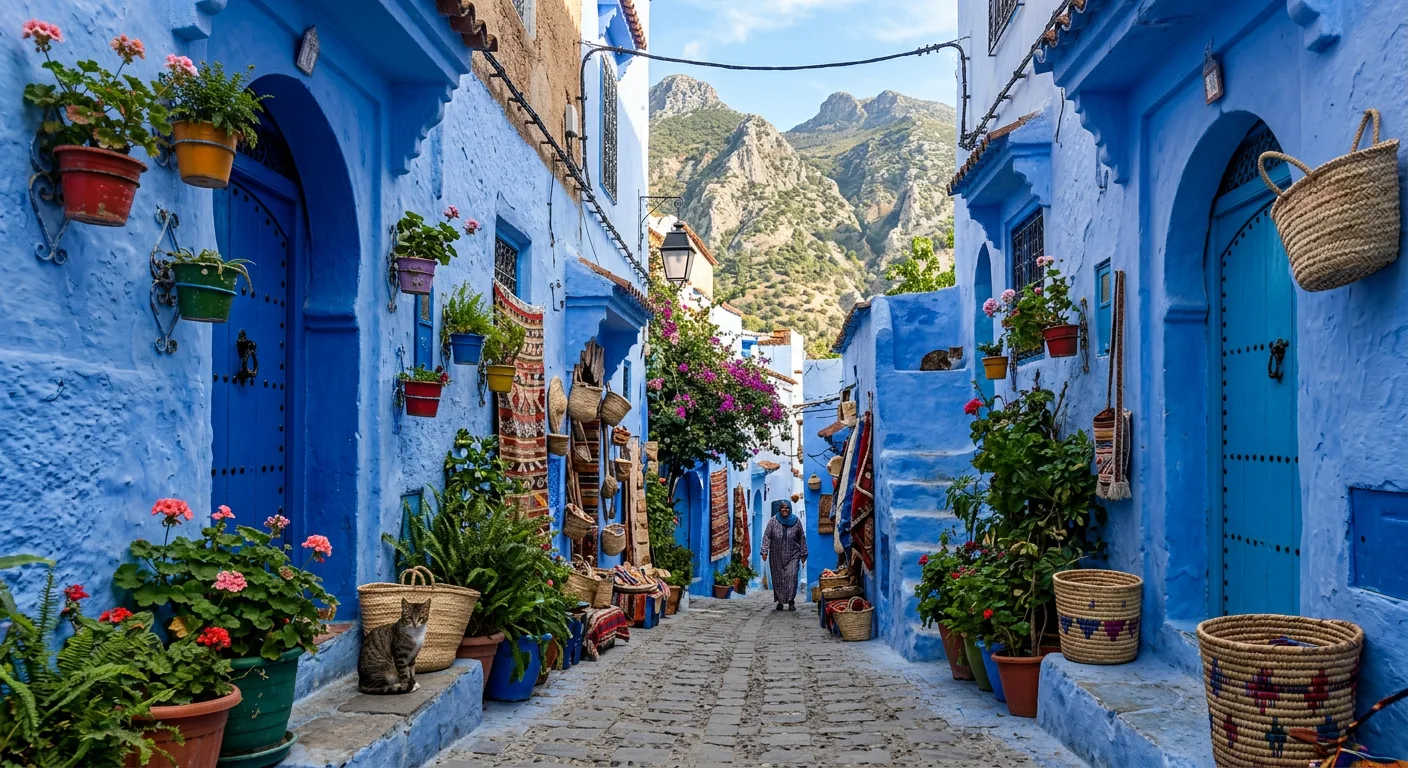
The short answer: Chefchaouen is one of the cheapest places to travel in Morocco. Once you are in town, a backpacker can get by on roughly $30–45 a day, a comfortable mid-range trip runs about $80–120 a day, and a private, top-end stay sits around $180–300+ a day. The one cost that catches people out is the journey — with no airport or train, every visit includes a paid road leg from Tangier or Fes. Here is where every dirham actually goes.
What a day in Chefchaouen costs
Three rough budgets cover most travellers. These are per person, per day, once you have arrived in town:
- Shoestring — about $30–45: a hostel bed or simple guesthouse room, tagines and street food, mint tea, and your own two feet (the medina is tiny and walkable).
- Mid-range — about $80–120: a characterful boutique riad, restaurant meals including a rooftop dinner, a guided medina walk and a shared taxi out to the Akchour waterfalls.
- Comfortable / private — about $180–300+: one of the best riads in town, a private driver or transfer, and a private guide for the medina and the Rif.
Where to stay — your biggest cost
Accommodation is the single line item that moves your budget most, and it is where Chefchaouen is kindest. A hostel bed or very plain room runs $15–30 a night; a pleasant private room in a small riad is roughly 250–450 dirhams ($25–45); and most of the photogenic boutique riads in the blue lanes charge 400–800 dirhams ($40–80) for a double. The few higher-end properties reach $100–180. The town average sits near $90 a night in season, so book early for spring and autumn weekends. For a neighbourhood-by-neighbourhood breakdown, see our guide to where to stay in Chefchaouen.
Getting there — the cost people forget
Because there is no airport or railway station, the journey is a real line in the budget rather than an afterthought:
- From Tangier: a shared grand-taxi seat is about 70 dirhams (~$7); a CTM or Supratours bus is around 50–80 dirhams for the 2.5-hour run.
- From Fes: the CTM bus is about 90–100 dirhams (~$9–10) for the four-hour trip via Ouazzane.
- Private transfer: from Tangier, a door-to-door car starts near €99 (~$105) for the whole vehicle — good value split three or four ways, and you can stop at Tetouan on the way.
The full rundown of buses, shared taxis and getting around the car-free medina once you arrive is in our guide to getting to and around Chefchaouen.
Food and drink — cheaper than you expect
Eating well here barely dents a budget. A tagine or bowl of bissara (bean soup) in or around Plaza Uta el-Hammam costs about 50–80 dirhams ($5–8), and a proper rooftop dinner with a view rarely tops 120–150 dirhams ($12–15) a head. Mint tea is 10–20 dirhams, a fresh msemen breakfast a few dirhams, and bottled water 5–10. Buy goat cheese, olives, bread and Rif honey in the souk and you have a near-free picnic for the trail. For what to order, see what to eat in Chefchaouen.
Sights, guides and the Akchour day
The medina is free to wander, which is the whole point of the place. Paid extras are modest: the restored kasbah and its small museum on the main square cost around 60 dirhams (~$6) to enter, and a private guided walk of the blue lanes is a few hundred dirhams split between your group. The big day out is the Akchour waterfalls in Talassemtane National Park — the trail is free, but a return taxi to the trailhead is roughly 150–250 dirhams for the car, with an optional local guide at 150–300. Done independently, the whole hiking day comes to under $25 a person. If you would rather have it organised end to end, our Akchour waterfalls hike handles the transport and route.
A sample two-day budget for two people
For a couple doing the classic one-night, two-day visit at a mid-range level, a realistic all-in spend in town looks like this (excluding how you reached Tangier or Fes):
- Boutique riad, one night: ~600 dirhams (~$60)
- Grand-taxi seats in from Tangier, both of you: ~140 dirhams (~$14)
- Three meals each plus tea and water across two days: ~450 dirhams (~$45)
- Return taxi and lunch for the Akchour hike: ~350 dirhams (~$35)
- Kasbah museum and a few souk purchases: ~250 dirhams (~$25)
That is roughly 1,790 dirhams (about $180) for two for a genuinely good two days — a price that is hard to match elsewhere in Morocco for the quality of the scenery. Want fewer days for less, or an extra night for Akchour and Tetouan? Our honest trip-length guide helps you choose.
How it compares — and where to save
Day to day, Chefchaouen runs cheaper than Marrakech or Fes: riads, food and guides all cost less, and there is far less commission-driven shopping pressure. The smart savings are simple — take the bus or share a grand taxi rather than booking a private car solo, eat where locals eat just off the main square, and do Akchour independently. The blue city also sits well inside a wider, value-led northern trip; for the country-wide picture see Morocco on a budget.
A note on cash
Treat Chefchaouen as a cash economy. There are ATMs around Plaza Uta el-Hammam and in the new town, but small riads, grand taxis, café tagines, the Akchour taxi and souk stalls overwhelmingly want dirhams in hand. Draw out enough for your stay plus the hiking day before you leave the main square, keep small notes for taxis and tips, and never assume a card will work down a medina lane.
Frequently asked
How much does it cost to visit Chefchaouen per day?
Chefchaouen is one of the cheaper places to travel in Morocco. A backpacker who sleeps in a simple guesthouse, eats tagines in the square and walks everywhere can manage on roughly $30–45 a day. A comfortable mid-range trip — a boutique riad, restaurant meals, a guided medina walk and a taxi out to Akchour — runs about $80–120 per person per day. If you want a top riad, a private driver and a private guide, budget $180–300+ a day. Those figures exclude the cost of getting to northern Morocco in the first place.
How much is a riad or hotel in Chefchaouen?
Accommodation is the biggest single cost and Chefchaouen is gentle on it. A bed in a hostel or a very simple guesthouse room sits around $15–30 a night. A pleasant private room in a small riad runs roughly 250–450 dirhams (about $25–45). Most characterful boutique riads in the blue medina charge 400–800 dirhams (about $40–80) for a double, and the handful of higher-end places reach $100–180. The town average lands near $90 a night in peak season — book ahead for spring and autumn weekends.
What does it cost to get to Chefchaouen?
There is no airport or train, so you pay for the road leg. From Tangier a shared grand-taxi seat is about 70 dirhams (roughly $7) and a CTM or Supratours bus is around 50–80 dirhams for the 2.5-hour run. From Fes the CTM bus is about 90–100 dirhams (roughly $9–10) for the four-hour trip. A private transfer from Tangier — door to door, with a stop on the way if you like — starts near €99 (about $105) for the whole car, which splits well between three or four people.
Is food expensive in Chefchaouen?
No — eating well here is cheap. A tagine or bowl of bean stew in or around Plaza Uta el-Hammam costs about 50–80 dirhams ($5–8), and a sit-down rooftop dinner with a view rarely tops 120–150 dirhams ($12–15) a head. Mint tea is 10–20 dirhams, a fresh msemen breakfast a few dirhams, and bottled water 5–10. Two people can eat three proper meals a day for well under $30 combined. Goat cheese, olives and Rif honey from the souk make near-free picnics for the Akchour trail.
What does it cost to hike the Akchour waterfalls?
The trail itself in Talassemtane National Park is free to walk. The cost is getting there: a return taxi from Chefchaouen to the Akchour trailhead (about 45 minutes each way) is roughly 150–250 dirhams for the car if you negotiate a wait-and-return, or you can share a grand taxi for less. A local guide for the higher falls or God's Bridge is optional and runs about 150–300 dirhams. Riverside cafés along the route sell tagines and tea, so the whole day can cost under $25 a person including transport and lunch.
Is Chefchaouen cheaper than Marrakech or Fes?
Generally yes. Riads, meals and guides all cost less than the equivalent in Marrakech, and there is little of the hard-sell, commission-driven shopping that pushes spending up in the big imperial cities. The one place Chefchaouen is not cheaper is the journey: with no airport or station you usually pay for a bus, shared taxi or private transfer on top of however you reached Tangier or Fes. Once you are in town, though, your daily spend drops noticeably compared with the south.
Should I bring cash, and are there ATMs in Chefchaouen?
Bring cash and treat the blue city as a cash economy. There are several ATMs around Plaza Uta el-Hammam and the new town, but small riads, grand taxis, café tagines, the Akchour taxi and souk stalls all expect dirhams and many do not take cards. Draw out enough for your stay plus the Akchour day before you leave the main square, keep small notes for taxis and tips, and don't rely on a card working in the medina's narrow lanes.
Plan it without guesswork
We'll build Chefchaouen into your budget — and your route.
Tell us where you're starting, how long you have and your comfort level, and we'll cost the blue city honestly: transfers, a riad we trust, and the Akchour day, with no hidden commissions.
Request an itinerary